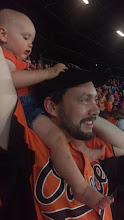
Welp, this is it. The 20th anniversary of the Orioles' own Black Thursday, January 10, 1991. If you want to see how blase the rest of the world is about that dark and dreary day, just look at the ho-hum treatment it gets from Baseball Reference. To quote from Curt Schilling's player page:
"January 10, 1991: Traded by the Baltimore Orioles with Steve Finley and Pete Harnisch to the Houston Astros for Glenn Davis."
Yep, that's it. 126.8 total WAR (wins above replacement) out, 0.1 total WAR in. But on the bright side, the Orioles weren't the only team to trade away Curt Schilling in a lousy deal. Check this out:
April 2, 1992: Traded by the Houston Astros to the Philadelphia Phillies for Jason Grimsley.
July 26, 2000: Traded by the Philadelphia Phillies to the Arizona Diamondbacks for Omar Daal, Nelson Figueroa, Travis Lee and Vicente Padilla.
November 28, 2003: Traded by the Arizona Diamondbacks to the Boston Red Sox for Michael Goss (minors), Casey Fossum, Brandon Lyon and Jorge de la Rosa.
That's four trades where the team moving Schilling didn't get much of anything in return. Still, none of the others hold a candle to the Orioles' stink bomb. People don't forget.
Monday, January 10, 2011
Sunday, January 9, 2011
Jeff Williams, 1992 Bowman #284
Whenever people ask Jeff Williams if he likes denim, he tells them, "No."
Then he breaks out in an irrepressible grin.
"I LOVE denim."
Then he breaks out in an irrepressible grin.
"I LOVE denim."
Saturday, January 8, 2011
Roberto Alomar, 1997 Score Heart of the Order #11
I spotted this card in a quarter box at one of my local hobby shops last week and picked it up. I'm a sucker for cards that show off Camden Yards and the Baltimore skyline, and this one does it with a full-bleed photo. It was part of a three-card subset that also included Rafael Palmeiro and Cal Ripken. I also grabbed the Palmeiro card, but still need Cal to complete the panorama. Raffy's card includes the Bromo Seltzer tower, which is a treat.
If you're eagle-eyed, you might be looking at the scoreboard and trying to hone in on the game. The video board indicates that Dave Hollins is the batter for the Twins. You can actually make out the whole Minnesota lineup up above:
Knoblauch 2B
Lawton RF
Molitor DH
Hollins 3B
Myers C
Kelly CF
Stahoviak 1B
Meares SS
Becker LF
Of course, Jimmy Haynes was the Orioles pitcher. Given this information, the game is easy to pin down. It was Sunday, April 14, 1996, and sadly the O's lost 4-1. Haynes and Twins starter Frankie Rodriguez matched zeroes until the fifth inning, when the visitors broke through for three runs on three hits and a walk. Hollins chased the young Birds pitcher with a two-out RBI single. The lone Oriole run came on a Cal Ripken double to score Bobby Bonilla in the bottom of the seventh. The normally high-octane O's had only three hits in the entire game, but it wasn't the end of the world. Even with the loss, they were still 9-2 on the young season en route to capturing the American League Wild Card.
If you're eagle-eyed, you might be looking at the scoreboard and trying to hone in on the game. The video board indicates that Dave Hollins is the batter for the Twins. You can actually make out the whole Minnesota lineup up above:
Knoblauch 2B
Lawton RF
Molitor DH
Hollins 3B
Myers C
Kelly CF
Stahoviak 1B
Meares SS
Becker LF
Of course, Jimmy Haynes was the Orioles pitcher. Given this information, the game is easy to pin down. It was Sunday, April 14, 1996, and sadly the O's lost 4-1. Haynes and Twins starter Frankie Rodriguez matched zeroes until the fifth inning, when the visitors broke through for three runs on three hits and a walk. Hollins chased the young Birds pitcher with a two-out RBI single. The lone Oriole run came on a Cal Ripken double to score Bobby Bonilla in the bottom of the seventh. The normally high-octane O's had only three hits in the entire game, but it wasn't the end of the world. Even with the loss, they were still 9-2 on the young season en route to capturing the American League Wild Card.
Friday, January 7, 2011
Vintage Fridays: Don Lenhardt, 1954 Bowman #53
Would you like to know some things about Don Lenhardt? Okay, here goes:
-He is still alive! As of this writing, Don is 88 years old.
-He had narrow feet, making it hard to find shoes that fit well. Accordingly, he was nicknamed "Footsie".
-Lenhardt served in the Navy for four years during World War II.
-Due partly to his military service, Don was 27 by the time he reached the majors with the 1950 Browns. As the starting first baseman, he led the sad-sack team (58-96 record) with 22 home runs, 81 RBI, 90 walks, and a .481 slugging percentage.
-He spent the next four years as a part-time player, until a broken leg ended his short career in 1954.
-Don played only 13 games for the Orioles at the onset of their inaugural 1954 season before he was dealt to the Red Sox. In those 13 games he managed just 5 hits (.152 AVG) and a single RBI.
-He scouted for the BoSox for several years and also coached and broadcast games for the club. He was responsible for the signing of major leaguers such as Dick Mills, Al Nipper, Scott Cooper, and Cory Bailey.
-He is still alive! As of this writing, Don is 88 years old.
-He had narrow feet, making it hard to find shoes that fit well. Accordingly, he was nicknamed "Footsie".
-Lenhardt served in the Navy for four years during World War II.
-Due partly to his military service, Don was 27 by the time he reached the majors with the 1950 Browns. As the starting first baseman, he led the sad-sack team (58-96 record) with 22 home runs, 81 RBI, 90 walks, and a .481 slugging percentage.
-He spent the next four years as a part-time player, until a broken leg ended his short career in 1954.
-Don played only 13 games for the Orioles at the onset of their inaugural 1954 season before he was dealt to the Red Sox. In those 13 games he managed just 5 hits (.152 AVG) and a single RBI.
-He scouted for the BoSox for several years and also coached and broadcast games for the club. He was responsible for the signing of major leaguers such as Dick Mills, Al Nipper, Scott Cooper, and Cory Bailey.
Thursday, January 6, 2011
Harold Baines, 1994 O-Pee-Chee #221
As promised, today I'll look at the collection of former Orioles on the 2011 Hall of Fame ballot who did not reach the 75% threshhold (436 of 581 ballots) needed to gain membership. Some will live to fight again in 2012, and others will never see the ballot again. In decreasing order of votes:
Lee Smith (263 votes, 45.3%): The onetime career saves leader actually saw his share drop from 47.3% last year. There's no rhyme or reason to the way the BBWAA regards relief pitchers. Bruce Sutter is in with 300 career saves, a 2.83 ERA, a 1.14 WHIP, and a 136 ERA+, but Lee's not even close with 478 saves, a 3.03 ERA, a 1.26 WHIP, and a 132 ERA+. Even more confusing is that John Franco (424 SV, 2.89 ERA, 1.33 WHIP, 138 ERA+) was one-and-done on the ballot, receiving 27 votes and a 4.6% share to fall barely short of the 5% cutoff for remaining under consideration.
Tim Raines (218 votes, 37.5%): Tim Senior got a fair bump from 2010's 30.4%, but it's disheartening that so few voters recognize his greatness. He was one of the dominant players of the 1980s, remained productive until age 41, maintained a career on-base percentage of .385 (62 points higher than Hall of Fame teammate Andre Dawson!), and stole 808 bases (more than all but four players in history) at an 85% success rate. Maybe a lack of big-name first-balloters in the next year or two will boost his prospects.
Rafael Palmeiro (64 votes, 11.%): Oof. And so the highfalutin' moral majority of the BBWAA has their say. Raffy himself was pretty realistic in his expectations for his first year on the ballot, figuring that he might poll 25%. Even that was a bit too hopeful, it seems. I'd point to the madness of such a meager showing for a player with the formerly-automatic counting stats of 3,000 career hits and 569 home runs, but this electoral statement has nothing on the injustice being done to Jeff Bagwell, who never tested positive, isn't somebody frequently cited as a steroid suspect, and yet received 41.7% of the vote with superlatives that include an MVP award, 488 doubles, 449 home runs, 202 steals, a slash line of .297/.408/.540, and an OPS+ of 149. I have a feeling that the next few years of Hall of Fame developments are going to be immensely frustrating.
And now, the four ex-O's who failed to receive 5% of the vote (30 total votes) and will not be eligible for the Hall in the future.
Harold Baines (28 votes, 4.8%): So close, and yet so far. Harold didn't go without a fight, as he scraped by for the previous four years with between 5.2% and 6.1% of the vote. Ultimately, he was the kind of player who has trouble making it to Cooperstown: quiet, unassuming demeanor; long and consistently good yet never spectacular career; lack of big round numbers (384 HR, 2,866 hits); and of course, the unfair stigma of having spent most of his career as a designated hitter after knee injuries robbed him of his mobility. So long, Harold. Thanks for getting it done for so long and so well.
Kevin Brown (12 votes, 2.1%): Here's a guy that got the shaft. He wasn't well-liked, didn't have a great postseason resume, and his final few injury-plagued years combined with the huge contract from the Dodgers probably are the things that stick out in peoples' minds. But his six-year peak was ridiculous (1996-2001: 92-45, 2.53 ERA, 1.06 WHIP, 163 ERA+). He was 211-144 with a career ERA of 3.28. He is 37th in career strikeouts with 2,397. I don't know that I would vote for him, but he certainly deserved to be in the conversation for more than one year.
B. J. Surhoff (2 votes, 0.3%): Well, someone was thinking of him anyway. One of the two votes that B. J. received was from ESPN's Barry Stanton, and it's generally kind of a neat story. At the beginning of Stanton's career, he covered and was impressed by a teenage Surhoff in amateur competition. He told the young player that he would be voting for him for the Hall of Fame someday, and he figured that he might as well take advantage of the opportunity. If he had thought that his vote for Surhoff would take away from a more deserving candidate, he maintains that he would not have done it. Indeed, if there's any issue with Stanton's ballot, it's his general decision-making: his votes went to Jack Morris, Edgar Martinez, Tino Martinez, Don Mattingly, and Surhoff. No Alomar, Blyleven, Raines, Larkin, Trammell, McGwire, Palmeiro...it's like he chose the other names at random. The lack of intellectual curiosity by some of these writers is baffling.
Charles Johnson: (0 votes, 0.0%): There were no Barry Stantons to shield CJ from the indignity of the goose egg. University of Miami product Johnson started off as a defensively gifted hometown hero with the Marlins, winning the National League Gold Glove in each of his first four seasons. He usually threw out at least 40% of base stealers and had some pop, reaching double-digits in home runs in 9 out of 10 seasons. 2000 seemed like a breakout year, as he batted .304 with 31 home runs and 91 RBI for the Orioles and White Sox. But he fell off a cliff at age 30, hitting .227 from 2002-2005 and bottoming out with a release from the lowly Devil Rays in June '05. What have you done for me lately?
So that's all I intend to say about the Hall of Fame until the ballot rolls out again late this year. One more time through the wringer for the first three guys on this list, and the first and probably last go-round for Javy Lopez and Scott Erickson.
Lee Smith (263 votes, 45.3%): The onetime career saves leader actually saw his share drop from 47.3% last year. There's no rhyme or reason to the way the BBWAA regards relief pitchers. Bruce Sutter is in with 300 career saves, a 2.83 ERA, a 1.14 WHIP, and a 136 ERA+, but Lee's not even close with 478 saves, a 3.03 ERA, a 1.26 WHIP, and a 132 ERA+. Even more confusing is that John Franco (424 SV, 2.89 ERA, 1.33 WHIP, 138 ERA+) was one-and-done on the ballot, receiving 27 votes and a 4.6% share to fall barely short of the 5% cutoff for remaining under consideration.
Tim Raines (218 votes, 37.5%): Tim Senior got a fair bump from 2010's 30.4%, but it's disheartening that so few voters recognize his greatness. He was one of the dominant players of the 1980s, remained productive until age 41, maintained a career on-base percentage of .385 (62 points higher than Hall of Fame teammate Andre Dawson!), and stole 808 bases (more than all but four players in history) at an 85% success rate. Maybe a lack of big-name first-balloters in the next year or two will boost his prospects.
Rafael Palmeiro (64 votes, 11.%): Oof. And so the highfalutin' moral majority of the BBWAA has their say. Raffy himself was pretty realistic in his expectations for his first year on the ballot, figuring that he might poll 25%. Even that was a bit too hopeful, it seems. I'd point to the madness of such a meager showing for a player with the formerly-automatic counting stats of 3,000 career hits and 569 home runs, but this electoral statement has nothing on the injustice being done to Jeff Bagwell, who never tested positive, isn't somebody frequently cited as a steroid suspect, and yet received 41.7% of the vote with superlatives that include an MVP award, 488 doubles, 449 home runs, 202 steals, a slash line of .297/.408/.540, and an OPS+ of 149. I have a feeling that the next few years of Hall of Fame developments are going to be immensely frustrating.
And now, the four ex-O's who failed to receive 5% of the vote (30 total votes) and will not be eligible for the Hall in the future.
Harold Baines (28 votes, 4.8%): So close, and yet so far. Harold didn't go without a fight, as he scraped by for the previous four years with between 5.2% and 6.1% of the vote. Ultimately, he was the kind of player who has trouble making it to Cooperstown: quiet, unassuming demeanor; long and consistently good yet never spectacular career; lack of big round numbers (384 HR, 2,866 hits); and of course, the unfair stigma of having spent most of his career as a designated hitter after knee injuries robbed him of his mobility. So long, Harold. Thanks for getting it done for so long and so well.
Kevin Brown (12 votes, 2.1%): Here's a guy that got the shaft. He wasn't well-liked, didn't have a great postseason resume, and his final few injury-plagued years combined with the huge contract from the Dodgers probably are the things that stick out in peoples' minds. But his six-year peak was ridiculous (1996-2001: 92-45, 2.53 ERA, 1.06 WHIP, 163 ERA+). He was 211-144 with a career ERA of 3.28. He is 37th in career strikeouts with 2,397. I don't know that I would vote for him, but he certainly deserved to be in the conversation for more than one year.
B. J. Surhoff (2 votes, 0.3%): Well, someone was thinking of him anyway. One of the two votes that B. J. received was from ESPN's Barry Stanton, and it's generally kind of a neat story. At the beginning of Stanton's career, he covered and was impressed by a teenage Surhoff in amateur competition. He told the young player that he would be voting for him for the Hall of Fame someday, and he figured that he might as well take advantage of the opportunity. If he had thought that his vote for Surhoff would take away from a more deserving candidate, he maintains that he would not have done it. Indeed, if there's any issue with Stanton's ballot, it's his general decision-making: his votes went to Jack Morris, Edgar Martinez, Tino Martinez, Don Mattingly, and Surhoff. No Alomar, Blyleven, Raines, Larkin, Trammell, McGwire, Palmeiro...it's like he chose the other names at random. The lack of intellectual curiosity by some of these writers is baffling.
Charles Johnson: (0 votes, 0.0%): There were no Barry Stantons to shield CJ from the indignity of the goose egg. University of Miami product Johnson started off as a defensively gifted hometown hero with the Marlins, winning the National League Gold Glove in each of his first four seasons. He usually threw out at least 40% of base stealers and had some pop, reaching double-digits in home runs in 9 out of 10 seasons. 2000 seemed like a breakout year, as he batted .304 with 31 home runs and 91 RBI for the Orioles and White Sox. But he fell off a cliff at age 30, hitting .227 from 2002-2005 and bottoming out with a release from the lowly Devil Rays in June '05. What have you done for me lately?
So that's all I intend to say about the Hall of Fame until the ballot rolls out again late this year. One more time through the wringer for the first three guys on this list, and the first and probably last go-round for Javy Lopez and Scott Erickson.
Wednesday, January 5, 2011
Roberto Alomar, 1996 Collector's Choice #463
Congratulations to Bert Blyleven and ex-Oriole Roberto Alomar on their selection for the Baseball Hall of Fame. By happenstance, the clinching Game Four of the 1996 American League Division Series was the focus of an Orioles Classics broadcast on MASN on Friday afternoon, and I watched all five hours of it. Even though 1996 was right in the middle of my formative years as a baseball fan, I believe this was the first time I'd seen this game. I remember going on a pre-planned bus trip to Kings Dominion with my church's youth group that Saturday. When we were all back in the bus at the end of the day, somebody announced the final score, and we let out a loud cheer. It was time to bring on the Yankees!
Nearly fifteen years later, I was struck both by how odd the game was and how long ago it seemed. It was originally broadcast on ESPN2, which still had the bizarre "underground" looking graphic interface, with all-lower-case letters and smears of color and what have you. Jon Miller (still the voice of the Orioles) had the play-by-play, but thankfully he was not joined by the insufferable Joe Morgan. Instead it was a three-man booth with Dave Campbell and the recently retired Kirby Puckett, who was something less than polished. The starting pitchers were Charles Nagy for the Indians, coming off of his career year (17-5, 3.41 ERA), and David Wells for the O's (11-14, 5.14 in his only season in Baltimore). Though Boomer had surrendered four runs in six and two-thirds innings in Game One, he fared better than Nagy, whom the Birds pounded for seven runs in five and one-third en route to a 10-4 win.
I'd forgotten just how much fun that 1996 Orioles team was. They were loaded with power-hitting veterans, and broke the 1961 Maris-Mantle Yankees team record by clubbing 257 home runs. A whopping seven hitters topped 20 home runs: Brady Anderson had 50, Rafael Palmeiro 39, Bobby Bonilla 28, Cal Ripken 26, Chris Hoiles 25, Alomar 22, B.J. Surhoff 21. As if the Birds didn't have enough sluggers, late-season trades brought in Todd Zeile (25 HR with the Phillies and O's) and Pete Incaviglia (18 total HR) and a returning Eddie Murray (22 total HR, including career #500). It would be hard to imagine that the pitching was a strength when you consider the 5.14 overall ERA, but it was a ridiculous year for offense; there were six teams in the American League alone with a higher mark, and I'd be willing to take my chances with a big three of Mike Mussina, Wells, and Scott Erickson.
It was interesting to see how Davey Johnson constructed his lineup. Brady and his 50 home runs led off, with Zeile as an unlikely #2 (he batted second in 100 of his 2016 career starts). A closer look shows that Todd offset a mediocre batting average with 82 walks in 1996, so Davey was on to something. Next came a murderous 3-4-5 of Alomar-Palmeiro-Bonilla, followed by Hall of Famers and old friends Cal and Eddie 6-7. Longtime Baltimore fans were probably used to seeing those two back-to-back, just not in those slots. Inky, starting for a hobbled Surhoff, played left field and batted eighth, and Chris Hoiles made one hell of a nine-hole guy.
Unfortunately, as the game progressed the weakness of that year's team was apparent: boom-or-bust. The O's jumped out to an early lead on back-to-back solo homers by Palmeiro and Bonilla in the second inning, and then were blanked for the next six frames. In 12 innings, they left 14 men on base. After the initial power display, Raffy and Bobby Bo were hitless for the rest of the game, each striking out four times. Oriole hitters struck out 23 times overall, while drawing only 3 walks.
On the mound, Wells battled gamely against a similarly-loaded Cleveland lineup. The catalysts were Kenny Lofton and Albert Belle, but combined they were 0-for-9 with a walk (an intentional pass to Belle in the first inning). The Indians broke through in the middle innings, with a two-out, two-run double by Sandy Alomar tying the contest in the fourth and and Omar Vizquel RBI single putting the hosts up 3-2 an inning later. Wells exited after seven innings, having allowed three runs on three walks and seven hits. Surprisingly, doughy reliever Terry Mathews held the Tribe in check in the eighth, which set the stage for ex-Oriole and current Indian closer Jose Mesa to slam the door on the O's.
Things looked grim as Incaviglia was called out on strikes and Surhoff (pinch-hitting for Hoiles) battled to a 2-2 count. But B.J., who had a gimpy hamstring and sore knee, sliced one up the middle and hobbled to first base. Having come through in a crucial moment, he was then lifted for pinch runner Manny Alexander. Next Anderson fought one off for a shallow fly ball single, and the tying run was in scoring position. But Zeile fouled out and the O's were down to their last out. On a 1-2 count, Alomar stroked a line drive to left, and it was a new game at 3-3. Raffy struck out again to strand the go-ahead runs, and it was up to the bullpen to get it to extras.
Out for a second inning of work, Mathews ran into trouble when he walked Manny Ramirez and failed to direct traffic on a Sandy Alomar infield pop-up. Jesse Orosco would have to bail him out of the two-on, one-out jam. But the 39-year-old lefty was having a miserable series. He had faced seven batters in the previous four games and retired only one. The low point came in Friday's Game Three, when he walked the bases loaded in the seventh inning of a tie game and was replaced by Armando Benitez. Benitez promptly served up a grand slam to Albert Belle, and Jesse was the losing pitcher. Proving he had a short-term memory, the veteran coaxed a grounder from Jose Vizcaino and struck out Lofton to bring on free baseball.
Things remained in a stalemate for two innings, as Indians manager Mike Hargrove stuck with Mesa and Davey Johnson got a bounceback performance from Benitez as well (2 IP, 0 ER, 0 H, 1 BB, 4 K). Surprisingly, Hargrove sent his closer out to begin the 12th - his fourth inning of work. Robbie Alomar led off and dealt the big blow, depositing a Mesa slider into the seats for the go-ahead run. Cal later chased the pitcher with a two-out double, but Chad Ogea pitched around Murray and struck out Mike Devereaux (a defensive sub for Inky in the 10th inning), ensuring that O's closer Randy Myers would come in with no margin for error. Fortunately, he didn't need any cushion, as he set the Tribe down 1-2-3 on 11 pitches, striking out Vizquel looking to send the Birds to their first ALCS since 1983. Of course, they couldn't have done it without the late-inning heroics of the newest Hall of Famer.
Most of the other ex-Orioles on the ballot didn't fare so well, sadly. I will give them their due tomorrow.
Nearly fifteen years later, I was struck both by how odd the game was and how long ago it seemed. It was originally broadcast on ESPN2, which still had the bizarre "underground" looking graphic interface, with all-lower-case letters and smears of color and what have you. Jon Miller (still the voice of the Orioles) had the play-by-play, but thankfully he was not joined by the insufferable Joe Morgan. Instead it was a three-man booth with Dave Campbell and the recently retired Kirby Puckett, who was something less than polished. The starting pitchers were Charles Nagy for the Indians, coming off of his career year (17-5, 3.41 ERA), and David Wells for the O's (11-14, 5.14 in his only season in Baltimore). Though Boomer had surrendered four runs in six and two-thirds innings in Game One, he fared better than Nagy, whom the Birds pounded for seven runs in five and one-third en route to a 10-4 win.
I'd forgotten just how much fun that 1996 Orioles team was. They were loaded with power-hitting veterans, and broke the 1961 Maris-Mantle Yankees team record by clubbing 257 home runs. A whopping seven hitters topped 20 home runs: Brady Anderson had 50, Rafael Palmeiro 39, Bobby Bonilla 28, Cal Ripken 26, Chris Hoiles 25, Alomar 22, B.J. Surhoff 21. As if the Birds didn't have enough sluggers, late-season trades brought in Todd Zeile (25 HR with the Phillies and O's) and Pete Incaviglia (18 total HR) and a returning Eddie Murray (22 total HR, including career #500). It would be hard to imagine that the pitching was a strength when you consider the 5.14 overall ERA, but it was a ridiculous year for offense; there were six teams in the American League alone with a higher mark, and I'd be willing to take my chances with a big three of Mike Mussina, Wells, and Scott Erickson.
It was interesting to see how Davey Johnson constructed his lineup. Brady and his 50 home runs led off, with Zeile as an unlikely #2 (he batted second in 100 of his 2016 career starts). A closer look shows that Todd offset a mediocre batting average with 82 walks in 1996, so Davey was on to something. Next came a murderous 3-4-5 of Alomar-Palmeiro-Bonilla, followed by Hall of Famers and old friends Cal and Eddie 6-7. Longtime Baltimore fans were probably used to seeing those two back-to-back, just not in those slots. Inky, starting for a hobbled Surhoff, played left field and batted eighth, and Chris Hoiles made one hell of a nine-hole guy.
Unfortunately, as the game progressed the weakness of that year's team was apparent: boom-or-bust. The O's jumped out to an early lead on back-to-back solo homers by Palmeiro and Bonilla in the second inning, and then were blanked for the next six frames. In 12 innings, they left 14 men on base. After the initial power display, Raffy and Bobby Bo were hitless for the rest of the game, each striking out four times. Oriole hitters struck out 23 times overall, while drawing only 3 walks.
On the mound, Wells battled gamely against a similarly-loaded Cleveland lineup. The catalysts were Kenny Lofton and Albert Belle, but combined they were 0-for-9 with a walk (an intentional pass to Belle in the first inning). The Indians broke through in the middle innings, with a two-out, two-run double by Sandy Alomar tying the contest in the fourth and and Omar Vizquel RBI single putting the hosts up 3-2 an inning later. Wells exited after seven innings, having allowed three runs on three walks and seven hits. Surprisingly, doughy reliever Terry Mathews held the Tribe in check in the eighth, which set the stage for ex-Oriole and current Indian closer Jose Mesa to slam the door on the O's.
Things looked grim as Incaviglia was called out on strikes and Surhoff (pinch-hitting for Hoiles) battled to a 2-2 count. But B.J., who had a gimpy hamstring and sore knee, sliced one up the middle and hobbled to first base. Having come through in a crucial moment, he was then lifted for pinch runner Manny Alexander. Next Anderson fought one off for a shallow fly ball single, and the tying run was in scoring position. But Zeile fouled out and the O's were down to their last out. On a 1-2 count, Alomar stroked a line drive to left, and it was a new game at 3-3. Raffy struck out again to strand the go-ahead runs, and it was up to the bullpen to get it to extras.
Out for a second inning of work, Mathews ran into trouble when he walked Manny Ramirez and failed to direct traffic on a Sandy Alomar infield pop-up. Jesse Orosco would have to bail him out of the two-on, one-out jam. But the 39-year-old lefty was having a miserable series. He had faced seven batters in the previous four games and retired only one. The low point came in Friday's Game Three, when he walked the bases loaded in the seventh inning of a tie game and was replaced by Armando Benitez. Benitez promptly served up a grand slam to Albert Belle, and Jesse was the losing pitcher. Proving he had a short-term memory, the veteran coaxed a grounder from Jose Vizcaino and struck out Lofton to bring on free baseball.
Things remained in a stalemate for two innings, as Indians manager Mike Hargrove stuck with Mesa and Davey Johnson got a bounceback performance from Benitez as well (2 IP, 0 ER, 0 H, 1 BB, 4 K). Surprisingly, Hargrove sent his closer out to begin the 12th - his fourth inning of work. Robbie Alomar led off and dealt the big blow, depositing a Mesa slider into the seats for the go-ahead run. Cal later chased the pitcher with a two-out double, but Chad Ogea pitched around Murray and struck out Mike Devereaux (a defensive sub for Inky in the 10th inning), ensuring that O's closer Randy Myers would come in with no margin for error. Fortunately, he didn't need any cushion, as he set the Tribe down 1-2-3 on 11 pitches, striking out Vizquel looking to send the Birds to their first ALCS since 1983. Of course, they couldn't have done it without the late-inning heroics of the newest Hall of Famer.
Most of the other ex-Orioles on the ballot didn't fare so well, sadly. I will give them their due tomorrow.
Tuesday, January 4, 2011
Jeffrey Hammonds, 1998 Pinnacle #115
I read an interesting post on The Platoon Advantage today. In it, "Bill" comes to the realization that a screening committee makes the ultimate determination about which eligible retired players appear on the Hall of Fame ballot. This year, that meant that 41 otherwise-eligible guys (10+ years of big league experience, retired since 2005) were turned away. Bill takes a look at each and every one of them, and finds something worth mentioning about their time in the majors. By my count, there were eight ex-Orioles: James Baldwin, Midre Cummings, Buddy Groom, Jeffrey Hammonds, Luis Lopez, Greg Myers, Keith Osik, and Steve Reed. You could also count Jay Powell, the reliever who was Baltimore's first-round draft pick in 1993 and was later traded for Bret Barberie. It's a nifty trip down memory lane, though the stark fact that Jeffrey Hammonds has been retired for five years is a slap upside my head. Where does time go, where is it still going?
Monday, January 3, 2011
Jim Dwyer, 1981 Topps Traded #757
A few minutes ago, I checked my email and found a trade proposal. One of my readers saw that I needed Ron Perranoski's card for my 1965 Topps set, and I had replied to him over the weekend to find out what he'd be looking for in return. Interestingly enough, his favorite player is/was Jim Dwyer, and it looks like I'll be able to fill a need in his player collection. Next I checked the Baseball Reference Bullpen's daily almanac to see if there were any Oriole-centric tidbits for January 3. As serendipitous coincidence would have it, today is "Pigpen" Dwyer's 61st birthday! It's also Monkton resident A.J. Burnett's birthday, but he's both a Yankee and a multimillionaire, so he gets nothing and likes it.
One more Jim Dwyer fun fact: the 2011 Hall of Fame class is being unveiled this Wednesday, and Bert Blyleven and Jack Morris are candidates who each have very ardent supporters. Dwyer was a contemporary of both players, and faced them many times. He batted 50 times against Morris, drawing 9 walks and hitting safely 12 times for a .300 average and .420 on-base percentage. In 28 trips to the plate against Blyleven, he managed only two walks and four hits (.154 AVG, .214 OBP). Make of that what you will.
Sunday, January 2, 2011
Charles Johnson, 1999 Topps Stars #132
I hope you'll indulge me in a second football post in a week, but it is January after all. Today I took my sister to her first Ravens game, and my first game this season. We had bought tickets online from a reseller on Friday on a whim, and were prepared to grab a Sherpa to help us with the trek up to section 537. But fate smiled on us. One of our uncles is a season ticket holder and he and his wife decided to forgo today's game when the rain started falling this morning. They offered us their tickets, in section 141 (bottom seating bowl, west end zone). We were also able to meet up with our uncle's regular tailgating crew and share in their free parking a flew blocks from the stadium. After grabbing a bite to eat and a few drinks at the tailgate, we walked over to M&T Bank Stadium (oh, corporate naming rights) and had our second bit of luck on the day as the rain stopped. The sun didn't make an appearance all afternoon, but 50 degrees and overcast is nothing to complain about for a January football game in Baltimore.
I generally like to make it to one football game a year just for the experience. Though baseball is my first passion, NFL games are a different creature. Crowd noise is such a big part of it, and it starts with the player introductions. My sister works for the company that provides the special effects for the Ravens, so we both enjoyed watching the team come charging through the tunnel with its glowing red eyes and columns of smoke and flames. A few moments later came the Star-Spangled Banner, complete with the roar of an "O!" from the hometown crowd. Here you can see me doing my best to blend into the sea of purple while still representing the Orioles, thanks to one of the purple O's-Ravens "rally caps" that were given away at Camden Yards on NFL Draft Day in April 2009.

The game itself was kind of brutal, with the 4-11 Bengals gaining twice as much yardage as the 11-4 Ravens. The Baltimore defense locked into "bend but don't break" mode, forcing five Cincinnati turnovers. Yet the game was still in doubt until only 16 seconds remained. At that moment, Bengal quarterback Carson Palmer threw an incompletion on fourth down from the Ravens' two-yard line. But two interceptions by future Hall of Famer Ed Reed (a University of Miami product, much like Mr. Charles Johnson) and three fumble recoveries gave all 71,088 of us in attendance plenty to shout about. Every time Palmer lined up under center, the crowd noise was deafening. Sometimes it's a lot of fun just to make loud noises for the sake of it, and even though I'll be hoarse for the next few days, I have no regrets. Now, Baltimore's other birds will hit the road for the playoffs. Kansas City won't know what hit it.
I generally like to make it to one football game a year just for the experience. Though baseball is my first passion, NFL games are a different creature. Crowd noise is such a big part of it, and it starts with the player introductions. My sister works for the company that provides the special effects for the Ravens, so we both enjoyed watching the team come charging through the tunnel with its glowing red eyes and columns of smoke and flames. A few moments later came the Star-Spangled Banner, complete with the roar of an "O!" from the hometown crowd. Here you can see me doing my best to blend into the sea of purple while still representing the Orioles, thanks to one of the purple O's-Ravens "rally caps" that were given away at Camden Yards on NFL Draft Day in April 2009.

The game itself was kind of brutal, with the 4-11 Bengals gaining twice as much yardage as the 11-4 Ravens. The Baltimore defense locked into "bend but don't break" mode, forcing five Cincinnati turnovers. Yet the game was still in doubt until only 16 seconds remained. At that moment, Bengal quarterback Carson Palmer threw an incompletion on fourth down from the Ravens' two-yard line. But two interceptions by future Hall of Famer Ed Reed (a University of Miami product, much like Mr. Charles Johnson) and three fumble recoveries gave all 71,088 of us in attendance plenty to shout about. Every time Palmer lined up under center, the crowd noise was deafening. Sometimes it's a lot of fun just to make loud noises for the sake of it, and even though I'll be hoarse for the next few days, I have no regrets. Now, Baltimore's other birds will hit the road for the playoffs. Kansas City won't know what hit it.
Saturday, January 1, 2011
Delino DeShields, 2000 Fleer Tradition #372
Since today is 1-1-11, I thought that I should turn to #11, Delino DeShields. Not only is it the first day of the new year, but it's also the third anniversary of the first-ever post on this blog. I had no idea when I started this blog whether I would be able to stay focused on writing every day. Three years and no end in sight. 1,096 posts and many more to come. Thanks for stopping by, and for sticking around. Let's make 2011 a great year.
Friday, December 31, 2010
Vintage Fridays: Baltimore Orioles, 1959 Topps #48
Could you picture Brooks Robinson in an Athletics uniform? Or Gus Triandos, or Milt Pappas, or Hoyt Wilhelm? It seems hard to imagine, but all of these scenarios very nearly occurred in 1959. At least, that's what former Baltimore Sun sports reporter Bob Maisel claimed.
My friend Ed recently gave me a stack of old magazines, game programs, newspapers, and other various Oriole artifacts. Among them was a game program from August 1987, which contained a series of "Untold Bird Tales" sponsored by USF&G Insurance. Maisel's story was about "the biggest trade never made". Here's his recollection verbatim:
"This is something that I wrote a story on back in 1959. But I'm sure it's forgotten now.
Paul Richards, the former Orioles manager, was a great innovator. And one night in 1959, he and Jack Dunn, an Orioles vice president, were having a big meeting with the officials of the Kansas City ball club. It was after a night game out in Kansas City, and it was right before the trading deadline. They had to make this deal by midnight, or that was it.
I was out there covering the team. And some of my sources told me, 'You'd better hang around. Crazy Richards has agreed to trade his entire 40-man roster for Kansas City's.'
Apparently, it was all agreed. It just hadn't been signed yet. They were going to completely exchange rosters. Each man thought he was getting the better end of the deal.
But in the middle of the meeting, the Kansas City owner got a phone call from his wife that took him out of the room for a few minutes. And when he came back, he had doubts. He said, well, maybe I'll keep Roger Maris. And then Richards said, well, maybe I'll keep Brooks Robinson And the whole deal fell apart.
But it almost happened. According to people who were in the room, it was all but done. If the Kansas City owner hadn't gotten that phone call, I think they would have made the deal."
So what are the odds that things actually unfolded in the manner described above? Well, Richards certainly had a reputation for wheeling and dealing. He had barely settled into his position with the O's when he pulled the trigger on a blockbuster 17-player trade with the Yankees in November 1954. Shortly after his death in 1986, Sports Illustrated eulogized him and mentioned the rumored Orioles/Athletics roster swap...but claimed that it was during the 1961 season. The July 1989 issue of Baseball Digest includes an article about trading that places the date in 1955. A book on the history of the Kansas City A's claims that it almost happened twice - in June 1956 and again in the spring of 1958 - and that it was Richards who balked first, preferring to keep Brooksie. A John Eisenberg column from 2003 gives the 1956 date, and says that K.C. refused to part with Maris and Clete Boyer. These variations in the date and other basic facts suggest that the anecdote is apocryphal.
Another cause for skepticism? This March 1983 Baseball Digest article, which claims that Paul Richards tried to trade his entire 40-man roster AND $5 million to the Braves for their 40-man roster when he was GM of the Astros in 1964! It's curious that the article makes no mention of Richards being involved in a similar proposal back in his Baltimore days, isn't it?
I also noticed that the "Richards tries to trade entire roster" rumors didn't seem to crop up until the 1980s, well after the fact. I went an extra mile and searched the Baltimore Sun archives, finally uncovering a June 16, 1956 article that discusses trade talks with the A's that had fallen through the previous day. No players are mentioned by name, much less any talk of entire rosters being switched. The bulk of the article concerns rumors of unrealized deals with the White Sox; here, specific players are named. The hottest rumor had shortstop Willie Miranda and catcher Hal Smith going to Chicago in exchange for second baseman Nellie Fox and outfielder Jim Rivera. I'd link to the article, but to view the entire article I had to purchase a PDF that I can only access for 90 days.
So sure, it's fun to navel-gaze and conceive of a radical overhaul of two different franchises, with Roger Maris taking aim at the seats in Memorial Stadium and Ralph Terry taking the place of Milt Pappas. But hindsight suggests that the Orioles were better off keeping their talented young building blocks anyway. Just remember: although truth may be stranger than fiction, sometimes a story can be too good to be true.
My friend Ed recently gave me a stack of old magazines, game programs, newspapers, and other various Oriole artifacts. Among them was a game program from August 1987, which contained a series of "Untold Bird Tales" sponsored by USF&G Insurance. Maisel's story was about "the biggest trade never made". Here's his recollection verbatim:
"This is something that I wrote a story on back in 1959. But I'm sure it's forgotten now.
Paul Richards, the former Orioles manager, was a great innovator. And one night in 1959, he and Jack Dunn, an Orioles vice president, were having a big meeting with the officials of the Kansas City ball club. It was after a night game out in Kansas City, and it was right before the trading deadline. They had to make this deal by midnight, or that was it.
I was out there covering the team. And some of my sources told me, 'You'd better hang around. Crazy Richards has agreed to trade his entire 40-man roster for Kansas City's.'
Apparently, it was all agreed. It just hadn't been signed yet. They were going to completely exchange rosters. Each man thought he was getting the better end of the deal.
But in the middle of the meeting, the Kansas City owner got a phone call from his wife that took him out of the room for a few minutes. And when he came back, he had doubts. He said, well, maybe I'll keep Roger Maris. And then Richards said, well, maybe I'll keep Brooks Robinson And the whole deal fell apart.
But it almost happened. According to people who were in the room, it was all but done. If the Kansas City owner hadn't gotten that phone call, I think they would have made the deal."
So what are the odds that things actually unfolded in the manner described above? Well, Richards certainly had a reputation for wheeling and dealing. He had barely settled into his position with the O's when he pulled the trigger on a blockbuster 17-player trade with the Yankees in November 1954. Shortly after his death in 1986, Sports Illustrated eulogized him and mentioned the rumored Orioles/Athletics roster swap...but claimed that it was during the 1961 season. The July 1989 issue of Baseball Digest includes an article about trading that places the date in 1955. A book on the history of the Kansas City A's claims that it almost happened twice - in June 1956 and again in the spring of 1958 - and that it was Richards who balked first, preferring to keep Brooksie. A John Eisenberg column from 2003 gives the 1956 date, and says that K.C. refused to part with Maris and Clete Boyer. These variations in the date and other basic facts suggest that the anecdote is apocryphal.
Another cause for skepticism? This March 1983 Baseball Digest article, which claims that Paul Richards tried to trade his entire 40-man roster AND $5 million to the Braves for their 40-man roster when he was GM of the Astros in 1964! It's curious that the article makes no mention of Richards being involved in a similar proposal back in his Baltimore days, isn't it?
I also noticed that the "Richards tries to trade entire roster" rumors didn't seem to crop up until the 1980s, well after the fact. I went an extra mile and searched the Baltimore Sun archives, finally uncovering a June 16, 1956 article that discusses trade talks with the A's that had fallen through the previous day. No players are mentioned by name, much less any talk of entire rosters being switched. The bulk of the article concerns rumors of unrealized deals with the White Sox; here, specific players are named. The hottest rumor had shortstop Willie Miranda and catcher Hal Smith going to Chicago in exchange for second baseman Nellie Fox and outfielder Jim Rivera. I'd link to the article, but to view the entire article I had to purchase a PDF that I can only access for 90 days.
So sure, it's fun to navel-gaze and conceive of a radical overhaul of two different franchises, with Roger Maris taking aim at the seats in Memorial Stadium and Ralph Terry taking the place of Milt Pappas. But hindsight suggests that the Orioles were better off keeping their talented young building blocks anyway. Just remember: although truth may be stranger than fiction, sometimes a story can be too good to be true.
Thursday, December 30, 2010
Miguel Tejada, 2006 Bowman #150
It was a breezy Sunday afternoon in 2005 when it happened. Bottom of the fourth inning, scoreless game, Miguel Tejada on third base with one out following a double and a grounder to the right side. The next batter up was B. J. Surhoff, who cracked a single into left field. Tejada scored easily, but heard a terrible commotion behind him. Crossing the plate, he glanced over his shoulder to see what it was, and was confronted with a terrible sight. A live bear had rushed the field from who-knows-where, and was mauling third base coach Sam Perlozzo. The umpires were pleading with the creature to leave Pelozzo alone and to return from the zoo or cave from which it came, but the bear either did not understand them or did not care to comply. It was, as many reporters and columnists observed, a dark day for baseball.
Wednesday, December 29, 2010
Rafael Palmeiro, 1997 Upper Deck SP #30
"I was telling the truth then, and I am telling the truth now,'' Palmeiro, 46, said in a phone interview with SI.com. "I don't know what else I can say. I have never taken steroids. For people who think I took steroids intentionally, I'm never going to convince them. But I hope the voters judge my career fairly and don't look at one mistake.'' (Source)
I just...I don't know. I wish this story would go away. Either Rafael Palmeiro is telling the truth, or he's one of the stubbornest liars there has ever been. There's no in-between. If he's being dishonest, what does he think he has to gain from trotting out the same story that fell flat five years ago?
For the record, I think he should be judged on his entire on-field body of work, and that by this standard, he is a Hall of Famer. I'm afraid that there are enough BBWAA voters on the self-appointed morality squad to bounce him from the ballot on his first try, though. After all, there are plenty who have said or implied they're not voting for Jeff Bagwell just because he played in the "steroid era" and hit a bunch of home runs. Sigh.
I just...I don't know. I wish this story would go away. Either Rafael Palmeiro is telling the truth, or he's one of the stubbornest liars there has ever been. There's no in-between. If he's being dishonest, what does he think he has to gain from trotting out the same story that fell flat five years ago?
For the record, I think he should be judged on his entire on-field body of work, and that by this standard, he is a Hall of Famer. I'm afraid that there are enough BBWAA voters on the self-appointed morality squad to bounce him from the ballot on his first try, though. After all, there are plenty who have said or implied they're not voting for Jeff Bagwell just because he played in the "steroid era" and hit a bunch of home runs. Sigh.
Tuesday, December 28, 2010
Eddie Murray, 2010 Topps Vintage Legends #VLC13
Remember the outstanding 1963-style Eddie Murray card I posted a few weeks back? I think that Topps may have created it as an apology for this weak effort that was inserted into second-series packs. What's wrong here? Let's count the offenses. Take one of the worst designs in the 60-year history of Topps Baseball (the milquetoast 1964 set), infuse it with a sickly green color, and find a photo of Steady Eddie posing in front of some mostly-empty seats. Sure, Murray is sporting one of the most terrifying scowls ever committed to cardboard, but he can only do so much.
Oh, and since when is Eddie Murray an outfielder? The man played 3,026 games in the majors, and exactly three of those were spent in left field, all coming during his 1977 rookie season. Not one of the Topps cards issued during Eddie's career designates him as an outfielder. It's nice to see that the company hasn't gotten complacent and sloppy since buying the exclusive license to manufacture MLB cards.
Monday, December 27, 2010
Cal Ripken, Jr., 1999 Pacific Invincible #4
Despite the fact that I am an avid Ravens fan, and that Baltimore's other franchise gives me a lot more cause to celebrate than the Orioles do, I generally try to keep the football discussion to a minimum here. I know that you're generally here for baseball. But a member of the purple and black set a franchise mark for durability yesterday, and naturally I thought of Cal Ripken, Jr.
Ravens linebacker Jarret Johnson has played in 126 games since the team drafted him from the University of Alabama in 2003, and yesterday marked his 112th consecutive game. He hasn't missed a Ravens game since early in his rookie season, and with yesterday's start against the Browns, he surpassed the previous club mark set by fellow linebacker Peter Boulware. It might not be comparable to Cal's 2,632-game, 17-season run with the Orioles, but in some ways it's even more impressive when you consider the physical toll that football takes on the bodies of the men who play the sport. In fact, JJ has been playing with two bad shoulders throughout the 2010 season. He tore his right labrum in training camp and sprained his left AC joint two weeks into the schedule. His personal-best 94 tackles were recorded in the 2007 season while he toughed out a broken thumb.
Congratulations, Jarret. You might not be invincible, but the fans of Charm City appreciate your hard work.
Ravens linebacker Jarret Johnson has played in 126 games since the team drafted him from the University of Alabama in 2003, and yesterday marked his 112th consecutive game. He hasn't missed a Ravens game since early in his rookie season, and with yesterday's start against the Browns, he surpassed the previous club mark set by fellow linebacker Peter Boulware. It might not be comparable to Cal's 2,632-game, 17-season run with the Orioles, but in some ways it's even more impressive when you consider the physical toll that football takes on the bodies of the men who play the sport. In fact, JJ has been playing with two bad shoulders throughout the 2010 season. He tore his right labrum in training camp and sprained his left AC joint two weeks into the schedule. His personal-best 94 tackles were recorded in the 2007 season while he toughed out a broken thumb.
Congratulations, Jarret. You might not be invincible, but the fans of Charm City appreciate your hard work.
Sunday, December 26, 2010
Saturday, December 25, 2010
Tom O'Malley, 1987 Fleer #477
Once again, a Merry Christmas to one and all, and a happy 50th birthday to Tom O'Malley, one of three ex-Orioles born on this momentous day (1950s pitchers Charlie Beamon and Mike Blyzka are the others).
This year brought a blend of traditions new and old for me and my family. Last night, I joined my parents and my brother-in-law's parents at my sister and her husband's house for a fantastic dinner. This is their first year in the house and my sister's first Christmas Eve dinner, and she aced it. We watched "It's A Wonderful Life" and then went to midnight mass. I've been under the weather for the last week, so I gratefully collapsed into bed as soon as I got to my parents' house at 1:30 AM. They were kind enough to let me sleep in, so I roused myself at 9:30 for a home-cooked breakfast of turkey bacon, scrambled eggs, and toast. My folks and I exchanged gifts and prepared the house for dinner. The extended family trickled in between 3:00 and 5:00 for dinner. We totaled 17 people this year, and the house was loud and warm for several hours while all of our favorite Christmas movies played on DVD (A Christmas Story, Elf, National Lampoon's Christmas Vacation, and A Muppet Christmas Carol). We wrapped up with a Secret Santa gift exchange, and everyone seemed quite pleased. I finally loaded up my car and got back home a little over an hour ago.
I made out really well. My big gift was a Keurig single-cup coffee and tea brewing machine, which is optimal for the lazy gentleman who's always in a rush before work. I also received a black Ray Rice Ravens jersey, a snazzy dark gray Orioles t-shirt, a Nintendo Wii Points card (which will be redeemed for downloadable Rock Band tracks), DVDs of Superbad and the third season of 30 Rock, a couple CDs (The Beatles' remastered "Help!" and Counting Crows' "This Desert Life"), and a couple baseball card-centric books: Cardboard Gods and Mint Condition. Oh, and there were four packs of 2010 Topps Update in my stocking, which filled a few set needs and provided me with two more Million Card Giveaway codes. I did as well as could be expected, receiving a 1968 Bill Henry and a 1981 Al Oliver when I redeemed them.
Now to finish unpacking and enjoy my plunder...
Friday, December 24, 2010
Vintage Fridays: Walt Dropo, 1960 Topps #79
I'd like to wish a Happy and healthy Christmas to all who celebrate it. I hope that you are spending the day with loved ones, and thinking of those who are no longer with you. Unfortunately one of the departed is former Orioles first baseman Walt "Moose" Dropo, who passed away a week ago at age 87. I talked a bit about his amazing rookie season and his embarrassing moments on Walt Dropo Day in one of my earliest Vintage Fridays entries. The only things that I'd like to add:
1) I'm glad to see that his grandchildren still sponsor "Grampie Walter"'s Baseball Reference player page. I'm sure he'll be missed.
2) Since Walt was playing out the end of his career by the time he became an Oriole, I wanted to call attention to one of his great games in Baltimore. On July 4, 1959, he went 3-for-5 with three runs scored, two homers, and four RBI as the Birds beat the Red Sox 11-5. His two-run home run in the second inning gave the O's a lead they wouldn't relinquish.
Rest in peace, Walt.
Thursday, December 23, 2010
Keith Moreland, 1990 Upper Deck #401
Well, that box break went even more poorly than I had anticipated. The gory details:
Three packs of 1988 Topps
A pack each of 1987, 1989, 1990 Topps
Two packs of 1988 Donruss
A pack each of 1989 and 1990 Donruss
A pack of 1990 Upper Deck
A repack of junk wax (1984 and 1987 Topps, 1988 and 1990 Score, 1992 Upper Deck…you know the drill)
A pack of 1986 Donruss Jumbo All-Stars
A pack of 1989 Topps UK Mini
A pack of 1998 Team Best Minor League
A mangled pack of 2009 Obak
It goes without saying that I was part of the 3,999 out of 4,000 that received no throwback soo-prize. The one pack from the last fifteen years was bent to bejeezus, and I got six packs from sets I’ve already completed. In the Upper Deck pack, I was treated to Keith Moreland, the 35-year-old veteran who the "Why Not?" Orioles acquired down the stretch in 1989. He rewarded them with a .215/.243/.280 slash line and 5 extra-base hits in 33 games, and even as the team was fighting tooth and nail with the Blue Jays for the A.L. East title, he complained about his playing time. When the O's were officially eliminated on the second-to-last day of the season, Moreland left the club and went home before the final game. What I'm saying is that he is the perfect representation for this dud purchase. Let this be a lesson to you: junk purchases are all in good fun, but the cheaper the better.
Wednesday, December 22, 2010
Billy Ripken, 1990 Topps #468
I made a foolish purchase today...but I absolutely intended to do so.
've been spending my hard-earned money on lots of not-so-fun things lately. Car repairs, new tires, paint for my bathroom walls. All of that lousy grown-up crap. So today, on the cusp of Christmas, I found myself pushing through the post-work traffic to get to the unholiest of unholies, Walmart. It was a necessary evil, to get a prescription filled for antibiotics to kill the lovely cough/whatever else that came to visit right before the holidays. With 30 minutes to waste before I could pick up my magic pills, I decided that I'd earned a trip across the store to the card aisle. I knew exactly what was waiting for me with its garish siren song:
I've seen this exact Pandora's Blaster Box on my last handful of trips to Wallyworld and each time Mr. Rational Side of the Brain has beaten back the impulses that scream, "Oooh! Shiny! 1950s and 1960s wax! Even if you don't get any of that, there's 16 packs! Try to find a better deal for $20!" Mr. Rational Side of the Brain sees the asterisks that decorate this box like one of Ford Frick's forbidden dreams. He sees the black bar at the bottom that promises that "the majority" of these boxes will contain 1980s, 1990s, and 2000s detritus, and he knows exactly what that means. At least 50% of these packs will be the same damned bundles of cardboard that fill boxes of duplicates in my closet: 1987 Topps. 1989 Topps. Maybe a little 1990 Topps, just because it's so monkeychucking ugly. 1990 Fleer. 1988 Score. If you look closely at the background image for the "16 Baseball Packs" boilerplate, you'll see more truth in advertising: I can make out images of wax packs of 1988, 1991, and 1992 Topps, Triple Play, a 1989 or 1990 Score...yep, this is certain doom.
Did I mention that there was one box left?
That was all the extra motivation that my impulsive side needed. Take the guesswork out of it, never spend the rest of my life lamenting that I chose the wrong box. This one was there for a reason. A side panel broadcasts the "Randomly-Inserted" Throwback Packs: 1961 Fleer Baseball Greats, 1964 Topps Stand Ups, 1965-1967 Topps, 1968 something-or-other, 1969 Topps Baseball Stamps. They even show the 1965 Topps Mickey Mantle, one of the 43 cards I need to complete that set! It's a sign. It was meant to be.
While I waited in line at the Pharmacy to check out, I read the ultra-fine print on the bottom of the box. There are 1:4,000 odds of finding a Throwback Pack, which is in actuality a voucher to be redeemed by mail. Redemptions allow you to be entered in a drawing for that "Big Find", the one and only pack of 1952 Topps High Series. Don't hold your breath, especially since the drawing doesn't take place until "on or around" 1/31/13. But hey, what's two years to wait?
Alright, I've taken you through my tortured thought process enough for one night. Check back tomorrow, and I'll let you know what treasures can be had in a box so cruelly enticing. With any luck, I'll at least get something nifty and forgotten like 2003 Topps Total.
've been spending my hard-earned money on lots of not-so-fun things lately. Car repairs, new tires, paint for my bathroom walls. All of that lousy grown-up crap. So today, on the cusp of Christmas, I found myself pushing through the post-work traffic to get to the unholiest of unholies, Walmart. It was a necessary evil, to get a prescription filled for antibiotics to kill the lovely cough/whatever else that came to visit right before the holidays. With 30 minutes to waste before I could pick up my magic pills, I decided that I'd earned a trip across the store to the card aisle. I knew exactly what was waiting for me with its garish siren song:
![]() |
| Surprise! It's garbage! |
Did I mention that there was one box left?
That was all the extra motivation that my impulsive side needed. Take the guesswork out of it, never spend the rest of my life lamenting that I chose the wrong box. This one was there for a reason. A side panel broadcasts the "Randomly-Inserted" Throwback Packs: 1961 Fleer Baseball Greats, 1964 Topps Stand Ups, 1965-1967 Topps, 1968 something-or-other, 1969 Topps Baseball Stamps. They even show the 1965 Topps Mickey Mantle, one of the 43 cards I need to complete that set! It's a sign. It was meant to be.
While I waited in line at the Pharmacy to check out, I read the ultra-fine print on the bottom of the box. There are 1:4,000 odds of finding a Throwback Pack, which is in actuality a voucher to be redeemed by mail. Redemptions allow you to be entered in a drawing for that "Big Find", the one and only pack of 1952 Topps High Series. Don't hold your breath, especially since the drawing doesn't take place until "on or around" 1/31/13. But hey, what's two years to wait?
Alright, I've taken you through my tortured thought process enough for one night. Check back tomorrow, and I'll let you know what treasures can be had in a box so cruelly enticing. With any luck, I'll at least get something nifty and forgotten like 2003 Topps Total.
Tuesday, December 21, 2010
Nick Markakis, 2009 Upper Deck Sweet Spot #81
If you're looking for a soft news item to put you in good cheer this holiday week (and really, who isn't?), look no further. Earlier today, Nick Markakis and his wife Christina picked up Jacqueline Bassett and her five children in a limousine and accompanied the family to a Target store in Cockeysville, MD for a Christmas shopping spree. The entire day was arranged by the OriolesREACH charity and Nick and Christina's Right Side Foundation for distressed children in Maryland.
Oh, and the Oriole Bird was there too.
Monday, December 20, 2010
Jason Berken, 2010 Topps When They Were Young #WTWY-JB
The card you see above came with today's mail as part of a trade with Randy Krolewicz, reader and friend of this little corner of the blog world. We had discussed a 2010 Topps trade, as I have plenty of dupes and still have some needs to fill from the Update Series. Though Randy wasn't able to fill any of those needs, he did have some insert cards featuring several Orioles. I noticed on Randy's website that he had some 1965 Topps available, so I figured it couldn't hurt to ask if he would be willing to throw one or two of those into the trade as well to even things out. He went above and beyond, including five of my 1965 Topps needs in a custom-made 1965 Topps "wrapper" and topping it off with a Boog Powell Gold Embossed card from that year's insert set! Thank you for the early Christmas gift, Randy! If anyone else would like to talk trade with him, check out his website and drop him a line.
As far as this card in particular is concerned, it's somewhat reassuring to see that Jason Berken had to wear the same cheesy foam-and-mesh caps and uncomfortable polyester pullover jerseys that I did in Little League. Major leaguers aren't all that different from you and me...except for the $400,000 starting salary, of course.
Sunday, December 19, 2010
Chris Hoiles, 1997 Collector's Choice #38
Nothing beats a great play-at-the-plate photo. Here we have Chris Hoiles lunging and laying the tag down with authority on Bernard Gilkey of the Mets. Hoiles has his tongue sticking out in intense concentration and his upper body twisted 45 degrees away from his legs. Gilkey has his batting gloves tucked in his left rear pocket, and his sliding legs have kicked up one hell of a dust cloud. With his left arm outstretched and his hand frozen in a clawlike gesture, it looks like he's trying to gouge the catcher's eyes out. Nice try, Bernard. You are OUT.
Saturday, December 18, 2010
Eddie Murray, 1988 Fleer Baseball All-Stars #28
If you spent the 1980s watching Eddie Murray dominate the competition at first base, you probably find it hard to believe that the Orioles are a week away from Christmas with a big question mark at that crucial position. Realistically, first base has been a revolving door and a weak spot for the O's since Rafael Palmeiro departed for the first time after the 1998 season. Here are the men who have played there most frequently by season in the ensuing years, with AVG/OBP/SLG, and home runs and RBI listed:
1999: Jeff Conine (.291/.335/.453, 13, 75)
2000: Will Clark (.301/.413/.473, 9, 28) Played only 79 games, injured and later traded to St. Louis
2001: Jeff Conine (.311/.386/.443, 14, 97)
2002: Jeff Conine (.273/.307/.448, 15, 63)
2003: Jeff Conine (.290/.338/.460, 15, 80) Played 124 games, traded to Florida
2004: Rafael Palmeiro (.258/.359/.436, 23, 88)
2005: Rafael Palmeiro (.266/.339/.447, 18, 60) Played only 110 games...you know why
2006: Kevin Millar (.272/.374/.437, 15, 64)
2007: Kevin Millar (.254/.365/.420, 17, 63)
2008: Kevin Millar (.234/.323/.394, 20, 72)
2009: Aubrey Huff (.253/.321/.405, 13, 72) Played only 110 games, traded to Detroit
2010: Ty Wigginton (.248/.312/.415, 22, 76) Made 89 of his 144 starts at 1B
Pretty sad, right? At a premium power position, the Birds haven't even had 25 homers in the past 12 years. Last year, thanks largely to the big steaming pile of awful that was Garret Atkins, they didn't get a single home run from a first baseman until the last day of June (a team-record 76 games). There have been plenty of first basemen available this offseason on the free agent market, but the O's were outbid for Victor Martinez and Adam Dunn and claim that they didn't make an offer to Carlos Pena. They are supposedly negotiating with both Adam LaRoche and Derrek Lee. The fact that either of them would represent an upgrade for the Orioles is telling; no one is going to rush to the ballpark to see them do their thing. Fans (yours truly included) are getting restless with the lengthy process that has unfolded, and are probably a bit worried that the team will get neither if they haven't wrapped one of them up already.
My preference, such as it is, is for LaRoche, who is four years younger and seems to have more power at this point in his career. It seems like the O's try to get him every year, and eventually they have to succeed, you would think. Besides, he's not an ex-Cub like Lee; I'd rather not hear the lame jokes about GM Andy MacPhail's Cub fetish. A word to the wise, should Adam ink a deal with Baltimore: he is a notoriously slow starter, with a .211/.304/.396 career slash line before May 1. It's his worst career month by nearly an 80-point margin of OPS. So we might just need - you guessed it - that much more patience.
I wish Eddie Murray could find the fountain of youth.
1999: Jeff Conine (.291/.335/.453, 13, 75)
2000: Will Clark (.301/.413/.473, 9, 28) Played only 79 games, injured and later traded to St. Louis
2001: Jeff Conine (.311/.386/.443, 14, 97)
2002: Jeff Conine (.273/.307/.448, 15, 63)
2003: Jeff Conine (.290/.338/.460, 15, 80) Played 124 games, traded to Florida
2004: Rafael Palmeiro (.258/.359/.436, 23, 88)
2005: Rafael Palmeiro (.266/.339/.447, 18, 60) Played only 110 games...you know why
2006: Kevin Millar (.272/.374/.437, 15, 64)
2007: Kevin Millar (.254/.365/.420, 17, 63)
2008: Kevin Millar (.234/.323/.394, 20, 72)
2009: Aubrey Huff (.253/.321/.405, 13, 72) Played only 110 games, traded to Detroit
2010: Ty Wigginton (.248/.312/.415, 22, 76) Made 89 of his 144 starts at 1B
Pretty sad, right? At a premium power position, the Birds haven't even had 25 homers in the past 12 years. Last year, thanks largely to the big steaming pile of awful that was Garret Atkins, they didn't get a single home run from a first baseman until the last day of June (a team-record 76 games). There have been plenty of first basemen available this offseason on the free agent market, but the O's were outbid for Victor Martinez and Adam Dunn and claim that they didn't make an offer to Carlos Pena. They are supposedly negotiating with both Adam LaRoche and Derrek Lee. The fact that either of them would represent an upgrade for the Orioles is telling; no one is going to rush to the ballpark to see them do their thing. Fans (yours truly included) are getting restless with the lengthy process that has unfolded, and are probably a bit worried that the team will get neither if they haven't wrapped one of them up already.
My preference, such as it is, is for LaRoche, who is four years younger and seems to have more power at this point in his career. It seems like the O's try to get him every year, and eventually they have to succeed, you would think. Besides, he's not an ex-Cub like Lee; I'd rather not hear the lame jokes about GM Andy MacPhail's Cub fetish. A word to the wise, should Adam ink a deal with Baltimore: he is a notoriously slow starter, with a .211/.304/.396 career slash line before May 1. It's his worst career month by nearly an 80-point margin of OPS. So we might just need - you guessed it - that much more patience.
I wish Eddie Murray could find the fountain of youth.
Friday, December 17, 2010
Vintage Fridays: Pat Kelly, 1977 Topps #469
And now, a snippet of conversation between Pat Kelly and Earl Weaver:
KELLY: "Skip, don't you want me to walk with the Lord?"
WEAVER: "I'd rather you walk with the bases loaded."
Aaaand scene.
KELLY: "Skip, don't you want me to walk with the Lord?"
WEAVER: "I'd rather you walk with the bases loaded."
Aaaand scene.
Thursday, December 16, 2010
Brian Roberts, 2010 Bowman #37
I consider myself a Brian Roberts collector, in that I collect baseball cards (and particularly those with Orioles on them) and he is my favorite player. Although I haven't sought out his cards in particular, I do currently have 72 of them. But I know that's just scratching the surface. After all, he's been an Oriole for 10 years, and the number of different cards released in that time has remained astronomical even as the card companies funneled down to two. Consider that night owl owns over 100 of Clayton Kershaw's cards, and the Dodgers pitcher has only been in the majors since 2008. Nonetheless, the 72 B-Rob cards that I own are a nice starting point. There are base cards and inserts, retro designs and shiny cutting-edge creations, bat relics and serial-numbered. There are pictures of him clean-shaven and scruffy, posing, batting, running, and fielding. There are cameos by Dustin Pedroia (pictured above), Lee Mazzilli, Gerald Laird, and Melvin Mora. It's time to get cracking, and expand the boundaries of my Brian Roberts player collection.
Wednesday, December 15, 2010
Robert Andino, 2010 Topps Heritage #71
I'm starting to get the idea that the Orioles really don't want Robert Andino around. Two years ago he was a surprise addition to the roster at the end of spring training, arriving via a trade that sent Hayden Penn to the Marlins. He spent all of 2009 as the O's utility infielder, and was...a pretty awful hitter: .222 AVG, .274 OBP, .288 SLG, 48 OPS+. It seems that last spring he turned off team officials with his lackadaisical approach to defense, so he began the season at Norfolk. Even though Brian Roberts was not healthy, the Birds decided that a decrepit Julio Lugo was preferable to Andino at second base. Instead, he got to play every day at AAA and didn't do anything special: .264/.302/.405, though he did flash enough power to hit 30 doubles and 13 homers. He committed 31 errors, which could mean that he got to a lot of balls, but it could also mean that he was sloppy. Anyway, he finally made it back to Baltimore in September and played better than expected, albeit in a small sample size: .295/.333/.459 in 16 games, with 4 doubles and 2 homers. Oh, and the home runs came in consecutive days against A.J. Burnett and CC Sabathia. He played second base, third base, and shortstop, and made only one error. However, after trading for shortstop J.J. Hardy, the O's re-signed Cesar Izturis to be the utility infielder. At best, Andino can hope to compete with Brendan Harris (also acquired in the Hardy trade) and possibly Nick Green (who was rumored to be signing a minor league deal last week) for another bench spot. But considering Izturis' negligible offensive value and the likeliness of a 12-man pitching staff, it's unlikely that the team will carry two light-hitting backup infielders. Sorry, Robert.
Tuesday, December 14, 2010
Earl Weaver, 1982 Donruss #27
Most of us will never have to let the media know that we are indeed still alive. But Earl Weaver had that unique honor yesterday.
It seems that Saturday, in none other than the New York Times, political columnist Ross Ramsey used a tortured metaphor to compare Democrats in the state of Texas to the Baltimore Orioles and suggested that in the afterlife, former Texas governor Ann Richards must be commiserating with Weaver on the current sorry state of their respective teams. Way to do your homework, Ross.
Not only is Earl still here with us on Earth (Florida, to be more precise), at 80 years old he hasn't lost his spark. Baltimore Sun reporter Mike Klingaman reached the Hall of Fame manager by phone yesterday to clear the air. His first reaction to the news that he'd been presumed dead: "I'll be damned." He also mentioned that he is no longer able to golf due to bad knees, and put a punctuation mark on his comments:
"I’ve always said that there were two places that I wouldn’t mind dying. One was Memorial Stadium; the other, the golf course...Now I’ve got to wait forever [to go], because both of those places are gone.”
Take your time, Earl. We'll be glad to put up with you for a while longer.
It seems that Saturday, in none other than the New York Times, political columnist Ross Ramsey used a tortured metaphor to compare Democrats in the state of Texas to the Baltimore Orioles and suggested that in the afterlife, former Texas governor Ann Richards must be commiserating with Weaver on the current sorry state of their respective teams. Way to do your homework, Ross.
Not only is Earl still here with us on Earth (Florida, to be more precise), at 80 years old he hasn't lost his spark. Baltimore Sun reporter Mike Klingaman reached the Hall of Fame manager by phone yesterday to clear the air. His first reaction to the news that he'd been presumed dead: "I'll be damned." He also mentioned that he is no longer able to golf due to bad knees, and put a punctuation mark on his comments:
"I’ve always said that there were two places that I wouldn’t mind dying. One was Memorial Stadium; the other, the golf course...Now I’ve got to wait forever [to go], because both of those places are gone.”
Take your time, Earl. We'll be glad to put up with you for a while longer.
Monday, December 13, 2010
Brady Anderson, 1997 Topps Gallery #57
In all of the weeks-long supposition and guesswork about the 2011 Oriole coaching staff, Brady Anderson was one of the few ex-O's who was a popular candidate. (Can I just say how relieved I am that we've gotten to the point in the offseason where we can chase rumors of actual player moves?) Brady, who played his last game in Baltimore a decade ago, didn't get hired. It seems like Buck Showalter put an emphasis on experienced coaches, men with whom he had a pre-existing relationship. That's all good and well. But I'm glad to read that Brady is still offering his advice and instruction to a few players whose success will be critical to the fortunes of next year's team.
Anderson and young outfielder Nolan Reimold started working together last year, as the slugger struggled to right himself following a disastrous start to the season both on and off-field. They've continued their partnership, and Brady has reported back to the Birds in the affirmative about Reimold's health and his ability to return to his 2009 form. The O's single-season home run record holder is convinced that Nolan had not fully recovered from offseason Achilles tendon surgery when he went north with the club last April. He also points out that while the left fielder was rehabbing his injury the previous winter, he was unable to take swings and continue with his usual offseason training regimen. I thought that the rumored Reimold-for-Jason Bartlett swap was a mistake that the team was fortunate to avoid, and it sounds like Anderson agrees. I just hope that he can train and mentor as well as he played.
As happenstance would have it, new third baseman Mark Reynolds also solicited Brady's assistance shortly before the Orioles traded for him. They're due to meet up in Arizona soon for some workouts and batting practice. I'll say one thing about Anderson; he certainly knows how to pick his pupils. He's coming in on the ground floor with Nolan and Mark. If they could each hit .250 with power in 2011, he'll look like an offensive guru.
Anderson and young outfielder Nolan Reimold started working together last year, as the slugger struggled to right himself following a disastrous start to the season both on and off-field. They've continued their partnership, and Brady has reported back to the Birds in the affirmative about Reimold's health and his ability to return to his 2009 form. The O's single-season home run record holder is convinced that Nolan had not fully recovered from offseason Achilles tendon surgery when he went north with the club last April. He also points out that while the left fielder was rehabbing his injury the previous winter, he was unable to take swings and continue with his usual offseason training regimen. I thought that the rumored Reimold-for-Jason Bartlett swap was a mistake that the team was fortunate to avoid, and it sounds like Anderson agrees. I just hope that he can train and mentor as well as he played.
As happenstance would have it, new third baseman Mark Reynolds also solicited Brady's assistance shortly before the Orioles traded for him. They're due to meet up in Arizona soon for some workouts and batting practice. I'll say one thing about Anderson; he certainly knows how to pick his pupils. He's coming in on the ground floor with Nolan and Mark. If they could each hit .250 with power in 2011, he'll look like an offensive guru.
Sunday, December 12, 2010
Dennis Martinez, 1986 Fleer #280
Things I learned from this photo:
1) Dennis Martinez donates his hair to "Locks for Labradors", a pet wig service that I just made up.
2) El Presidente's head was disproportionately large for the rest of his body.
3) Martinez used a Mizuno glove with his name embroidered on it.
4) The large blurry gentleman in the light blue shirt at top right must really enjoy watching Dennis pose for baseball card pictures.
1) Dennis Martinez donates his hair to "Locks for Labradors", a pet wig service that I just made up.
2) El Presidente's head was disproportionately large for the rest of his body.
3) Martinez used a Mizuno glove with his name embroidered on it.
4) The large blurry gentleman in the light blue shirt at top right must really enjoy watching Dennis pose for baseball card pictures.
Saturday, December 11, 2010
Sammy Sosa, 2005 Upper Deck MVP #79
Here's my makeup post for yesterday. It features a player who accomplished many great things in his career, regardless of the questionable means he used to do so. Sammy Sosa was a seven-time All-Star, an MVP, and the second man to ever to hit 62 home runs. He topped Roger Maris' former single-season record three times in four years and only six players all-time have exceeded his total of 609 home runs. But I feel that I accomplished something even greater yesterday: I finally painted my bathroom.
It took most of my Saturday, required the help of a more ambitious friend, and left me feeling like I could use some of Slammin' Sammy's pharmaceuticals, but at long last all of the walls in my inner sanctum are one color...and that color is no longer a frightening bright institutional mint green. Eat your heart out, Sosa.
Friday, December 10, 2010
Vintage Fridays: Ellie Hendricks, 1976 Topps #371
Occasionally, I like the layout and photo of a card so much that I feel like my own words couldn't do it justice. Such is the case with this sublime card featuring Elrod Hendricks soaking up the sun on a bright afternoon late in his career and flashing a candid and typical smile. Just another day at the office for Mr. Oriole.
Thursday, December 9, 2010
Koji Uehara, 2009 Upper Deck Goodwin Champions #139
I'm very pleased with the moves the Orioles have made in the past 24 hours.
First, they reached an agreement late last night on a new contract for Koji Uehara. I was confused when the O's declined to offer him salary arbitration, but in hindsight they saved money. If he'd accepted arbitration, he likely make at least $6 million in 2011 (his 2010 salary was $5 million). Instead, Koji signed a one-year deal for $3 million guaranteed with another $2 million in incentives and an option for 2012. It's a pretty low-risk deal for someone who was excellent when he finally got healthy.
Around lunchtime today, the Birds finally completed a trade for another talented infielder in his prime, acquiring shortstop J.J. Hardy and utility infielder Brendan Harris from the Twins for minor league relievers Brett Jacobsen and Jim Hoey. Minnesota even threw in $500,000 to offset some of the salary difference. Hardy is 28, has some pop (he hit a total 61 doubles and 50 homers in 2007 and 2008 with the Brewers), and is regarded as a strong defender. At this point in his career, he's just as good as Cesar Izturis with the glove and even if his offense remains at the lower level of his 2009-2010 numbers, he's actually a significant upgrade over Cesar with the bat. Twins fans are howling over the deal, which I'll take as a good sign.
I feel much better about the deals Andy MacPhail has made this week than I did about the retread Band-Aids he slapped on last year's team. It's starting to look like a major league club...of course the less said about the Red $ox and the Yankee$, the better.
First, they reached an agreement late last night on a new contract for Koji Uehara. I was confused when the O's declined to offer him salary arbitration, but in hindsight they saved money. If he'd accepted arbitration, he likely make at least $6 million in 2011 (his 2010 salary was $5 million). Instead, Koji signed a one-year deal for $3 million guaranteed with another $2 million in incentives and an option for 2012. It's a pretty low-risk deal for someone who was excellent when he finally got healthy.
Around lunchtime today, the Birds finally completed a trade for another talented infielder in his prime, acquiring shortstop J.J. Hardy and utility infielder Brendan Harris from the Twins for minor league relievers Brett Jacobsen and Jim Hoey. Minnesota even threw in $500,000 to offset some of the salary difference. Hardy is 28, has some pop (he hit a total 61 doubles and 50 homers in 2007 and 2008 with the Brewers), and is regarded as a strong defender. At this point in his career, he's just as good as Cesar Izturis with the glove and even if his offense remains at the lower level of his 2009-2010 numbers, he's actually a significant upgrade over Cesar with the bat. Twins fans are howling over the deal, which I'll take as a good sign.
I feel much better about the deals Andy MacPhail has made this week than I did about the retread Band-Aids he slapped on last year's team. It's starting to look like a major league club...of course the less said about the Red $ox and the Yankee$, the better.
Wednesday, December 8, 2010
Mike Mussina, 1999 Pacific Prism #19
Mike Mussina's 42nd birthday is today. Believe it. Believe these fun facts, too:
-With 270 career wins, he nearly doubles the total of all of the other pitchers born on December 8 combined (139).
-He won at least one game in 26 different stadiums, which is more impressive when you consider that he pitched for American League teams for all of his 18 years in the majors.
-Despite bolting to the Yankees in mid-career, he had more W's at Oriole Park at Camden Yards than at Yankee Stadium, 77-72.
-Moose pitched to 21 catchers in his career, including the uncle-nephew tandem of Rick Dempsey and Gregg Zaun.
-Amongst opposing hitters, former Rookie of the Year Bob Hamelin had the most at-bats against him without a hit, going 0-for-21 with a walk. Kirk Gibson was 0-for-15 with a walk, and current Frederick Keys coach Denny Hocking was 0-for-16 with a sac bunt.
-Mike's top five strikeout victims: Jason Varitek (30), Carlos Delgado (29), David Ortiz (27), Brian Daubach (25), Manny Ramirez (25).
-He pitched in 537 games, more than other Stanford University product. Other Orioles who played college ball at Stanford: Chuck Essegian, Pete Stanicek, Jeff Ballard, Jeffrey Hammonds, Paul Carey, Rick Helling, Brian Sackinsky, and Jeremy Guthrie.
-Other December 8 birthdays: Mary Queen of Scots, Eli Whitney, Diego Rivera, Sammy Davis, Jr., Jim Morrison, Sam Kinison, and Dwight Howard. Of interest only to me: WWE broadcaster Michael Cole (he was born on 12-8-68, same as Moose. Mussina's middle name is Cole. Spooky.) and LOST costars Dominic Monaghan and Ian Somerhalder.
Tuesday, December 7, 2010
Ty Wigginton, 2009 Topps Heritage #649
Just like that, another player becomes an ex-Oriole. Today Ty Wigginton signed a two-year, $7.5 million deal with the Rockies. He essentially replaces Melvin Mora as Colorado's utility infielder. Yesterday Mora signed with the Diamondbacks right after they traded Mark Reynolds to the Orioles. Circle of life. So long, Wiggy. We'll always remember your unusual April-May 2010 power surge, the sublime humor of your 13 innings at shortstop in 2009, and that time you flipped out on the first base umpire in that game against the Twins.
I probably shouldn't pay such close attention to the Hot Stove rumors. I spent a good deal of time today pre-emptively flipping out over reports that the Orioles were likely trading Nolan Reimold to the Rays for shortstop Jason Bartlett, but the deal fell through by dinner time. With any luck, it's dead in the water. Bartlett would be an upgrade over the offensively impotent Cesar Izturis, but it would be a crime to sell so low on Reimold. It was just two years ago that he was one of the best-hitting rookies in the league, and I'd expect him to be healthier, more focused, and back in form in 2011. We'll see what news tomorrow holds.
Monday, December 6, 2010
David Hernandez, 2009 Topps Chrome #198
It took a few weeks, but the Orioles have made their first significant move of the offseason. Today they traded David Hernandez and Kam Mickolio to the Diamondbacks for third baseman Mark Reynolds and a player to be named later. I'm cautiously optimistic about this move. I feel like the O's didn't give up too much. Hernandez is a promising young pitcher and seemed to come into his own once he was switched to the bullpen (7-3, 3.16 ERA, 45 K in 37 IP), and Mickolio took a major step back in 2010 - he'll be 27 in May, and can't be considered a prospect any more. I'm just relieved that they didn't give up Chris Tillman as previously rumored.
As far as Mark Reynolds, the deficiencies in his game jump right out at you. In 2008, he was the first player to strike out 200 times in a season, and he blew his own record out of the water with 223 the following year. Last year he had 211 whiffs and his batting average plunged from .260 to .198. But strikeouts aren't as stigmatized as they once were; they're not any worse than any other type of out, and they're better than double plays (I'm looking at you, Miguel Tejada). And even with all of the strikeouts and the low batting averages (.242 for his career), he still has a lot of value as a hitter. Unlike the aforementioned Tejada and the rookie Josh Bell, Reynolds is not afraid to take a walk. Last year he walked a career-high 83 times, nearly four times as often as Baltimore's cast of third basemen combined. Then, of course, there's the power. Whether or not the University of Virginia product ever matches the 44 home runs he hit in 2009, there's no question that he is a legitimate power hitter. In a down year last year, he still clouted 32 homers, one every 15.6 at bats. The O's have only had three 30-homer seasons in the last decade: Aubrey Huff in 2008, Miguel Tejada in 2004, and Tony Batista in 2002. Besides, Reynolds is still relatively young (27) and affordable. He's under contract for two more years, with a team option for a third. I guess what I'm saying is that he is not another Garrett Atkins.
Welcome to Baltimore, Mark. I look forward to watching you swing for the fences at Camden Yards.
As far as Mark Reynolds, the deficiencies in his game jump right out at you. In 2008, he was the first player to strike out 200 times in a season, and he blew his own record out of the water with 223 the following year. Last year he had 211 whiffs and his batting average plunged from .260 to .198. But strikeouts aren't as stigmatized as they once were; they're not any worse than any other type of out, and they're better than double plays (I'm looking at you, Miguel Tejada). And even with all of the strikeouts and the low batting averages (.242 for his career), he still has a lot of value as a hitter. Unlike the aforementioned Tejada and the rookie Josh Bell, Reynolds is not afraid to take a walk. Last year he walked a career-high 83 times, nearly four times as often as Baltimore's cast of third basemen combined. Then, of course, there's the power. Whether or not the University of Virginia product ever matches the 44 home runs he hit in 2009, there's no question that he is a legitimate power hitter. In a down year last year, he still clouted 32 homers, one every 15.6 at bats. The O's have only had three 30-homer seasons in the last decade: Aubrey Huff in 2008, Miguel Tejada in 2004, and Tony Batista in 2002. Besides, Reynolds is still relatively young (27) and affordable. He's under contract for two more years, with a team option for a third. I guess what I'm saying is that he is not another Garrett Atkins.
Welcome to Baltimore, Mark. I look forward to watching you swing for the fences at Camden Yards.
Sunday, December 5, 2010
Cal Ripken, Jr., 1993 Topps Stadium Club Master Photo Winner
A few months back, my aunt and uncle called me from a flea market to let me know that they'd found someone selling sports cards. My entire family has become a hobby recon squad in the past few years, sniffing out cardboard wherever their travels take them. I listened to my uncle rattle off a short list of junk wax for sale, and asked him to pick up a $10 box of 1993 Stadium Club Series 1 for $10. I finally picked it up at Thanksgiving dinner, and spent a week or so ripping packs. The collation was pretty lousy; I think it was about 50% doubles. But what do you want for a cool Alexander Hamilton? Besides, I did snag this Cal Ripken, Jr. winner card. Tell him what he won, Rod!
"CONGRATULATIONS! This card entitles you to three (3) Stadium Club Master Photos from Stadium Club Baseball series #1. A MASTER PHOTO is the uncropped version of the photograph used in the Stadium Club 1993 Series with 22% more photo area than a 2 1/2" X 3 1/2" card. A MASTER PHOTO lets you see what the photographer sees through his lens. Each MASTER PHOTO (Ed. Note: Enough with the Caps Lock!) is printed on high grade 5" X 7" white stock enhanced with our Stadium Club Master Photo Design.
The Group A02 MASTER PHOTOS you have won are CAL RIPKEN (pictured on this card), MIKE SCIOSCIA and CARLOS BAERGA..."
Okay, enough with the boilerplate. Time to put my $1.50 shipping charge in an envelope and reap my sweet Master Ph- what's this?
"*MASTER PHOTO WINNER* Cards must be redeemed no later than 1/31/94."
Aww, rat farts! Oh well, at least I've got the Winner Card to add to my Orioles collection.
"CONGRATULATIONS! This card entitles you to three (3) Stadium Club Master Photos from Stadium Club Baseball series #1. A MASTER PHOTO is the uncropped version of the photograph used in the Stadium Club 1993 Series with 22% more photo area than a 2 1/2" X 3 1/2" card. A MASTER PHOTO lets you see what the photographer sees through his lens. Each MASTER PHOTO (Ed. Note: Enough with the Caps Lock!) is printed on high grade 5" X 7" white stock enhanced with our Stadium Club Master Photo Design.
The Group A02 MASTER PHOTOS you have won are CAL RIPKEN (pictured on this card), MIKE SCIOSCIA and CARLOS BAERGA..."
Okay, enough with the boilerplate. Time to put my $1.50 shipping charge in an envelope and reap my sweet Master Ph- what's this?
"*MASTER PHOTO WINNER* Cards must be redeemed no later than 1/31/94."
Aww, rat farts! Oh well, at least I've got the Winner Card to add to my Orioles collection.
Saturday, December 4, 2010
Alan Mills, 1998 Pacific Online #94
This is a pretty transparent attempt by Pacific to capitalize on that "Inter-net" thing that everyone was talking about back in the late 1990s. I can't tell you for sure whether the first URL actually led to a web page about Alan Mills; today, it leads nowhere. The other URL actually redirects to the Orioles' official website. I do remember the halcyon days when teams maintained their own sites independently of Major League Baseball, but I don't know why "theorioles.com" was necessary. I'm guessing some other quick-thinking wonk snapped up "orioles.com", but the O's and MLB eventually got their mitts on it.
As long as we're accessing the WABAC machine, you can see the Orioles' website as it looked in June 1997 by following this link. It seems like another lifetime, doesn't it?
Friday, December 3, 2010
Vintage Fridays: Carlos Lopez, 1979 Topps #568
I was leafing through my vintage Orioles binder today and realized that I know less than nothing about Carlos Lopez. That's why we have the Internet, I suppose. Now I can tell you that Carlos was born in Mexico, making him one of twelve all-time O's from south of the border. The most prominent were Fernando Valenzuela and Rodrigo Lopez. The outfielder played in the Mexican League from 1969-1973, at which point the Angels purchased his contract. He batted .321 with 126 extra-base hits in three years in the minors. He went 0-for-10 with a pair of walks in a late 1976 audition with California, and was claimed by the Mariners in that offseason's expansion draft. At age 28, he started 75 games in right field for Seattle and batted a team-high .283 with 8 home runs and 34 RBI. His 16 steals were surpassed only by Dave Collins' 25 thefts.
In December 1977, Carlos and journeyman pitcher Tommy Moore were traded to the Orioles for pitcher Mike Parrott. Moore was released by the Birds in March, but Lopez spent the entire 1978 season in Baltimore as a bench player. He appeared in 129 games but started only 47, batting .238 with 4 homers and 20 RBI. He was error-free in 62 chances in right field, and had a pair of three-hit games. It proved to be his last season in the majors and his penultimate year in pro ball. In 1979 he hit .282 and went 24-for-31 as a base stealer for the Rochester Red Wings. Thirty years later, some shlub wrote a blog post about him.
Thursday, December 2, 2010
Eddie Murray, 1985 Topps #700
This past Tuesday I got a complimentary email from a reader named Robert. He has visited and enjoyed this blog for a few months now, and he requested that I post this very card. Robert supposes that this is his favorite card, and I must say that he has exquisite taste in cardboard.
This is the Mona Lisa of baseball cards, says I. Instead of a knowing smirk, Steady Eddie wears an icy-cool stare. The juxtaposition of his game face and the wide smile of the cartoon bird on his cap is pitch perfect. His afro glistens in the afternoon soon as though it were ringed with fire. His mutton chops join with his mustache to create an unbreakable wreath of hair from his skull to his face and back again. Of course I don't have to tell you that Eddie puts the soul in the soul patch, a finishing touch that he pulls off with aplomb.
If I had my way, this card would hang in the National Portrait Gallery.
This is the Mona Lisa of baseball cards, says I. Instead of a knowing smirk, Steady Eddie wears an icy-cool stare. The juxtaposition of his game face and the wide smile of the cartoon bird on his cap is pitch perfect. His afro glistens in the afternoon soon as though it were ringed with fire. His mutton chops join with his mustache to create an unbreakable wreath of hair from his skull to his face and back again. Of course I don't have to tell you that Eddie puts the soul in the soul patch, a finishing touch that he pulls off with aplomb.
If I had my way, this card would hang in the National Portrait Gallery.
Wednesday, December 1, 2010
Tom Underwood, 1985 Fleer #194
While making the card blog rounds this morning, I learned some sobering news. Former Orioles (and Phillies, Cardinals, Blue Jays, Yankees, and Athletics) pitcher Tom Underwood died last Monday after a battle with pancreatic cancer. He was 56 years old, the same age as my parents.
Tom was a solid major league pitcher for a decade, though he didn't quite reach the heights than many expected after his first few years with the Phillies. He won 14 games as a rookie in 1975, and followed up with a 10-5 record and a 3.53 ERA for the National League East champs the next year. A low point came in 1978-1979, when he was saddled with a combined 15-30 record for some awful Blue Jays teams despite a solid 3.88 ERA. He split his time between the bullpen and rotation for New York and Oakland over the next few years and fared better, then joined the Orioles as a free agent for the 1984 season. Used almost exclusively in relief, Underwood had one win, no losses, one save, and a 3.52 ERA in 37 games. He wasn't unhittable by any means, allowing a .283 average by opposing hitters and giving up nearly 10 hits per 9 innings. But his ERA was also inflated by a disastrous debut; he coughed up six runs in an inning of work on April 7. Without that meltdown, he would have been at 2.80 for the year. Nonetheless, he was released at season's end. He spent 1985 struggling back in the minors for the Yankees, and then hung up his spikes with a career record of 86-87 and a 3.89 ERA.
Long before I knew who Tom Underwood was, he was in my life. When I was a kid I had a small stack of cards that were probably given to me by a relative or friend of the family. Included were four 1982 Topps cards: three Orioles (Steve Stone, Gary Roenicke, and Al Bumbry) and one Athletics (Tom Underwood). Up until a few years ago, I didn't even realize that he had ended his major league career as an Oriole. That card seemed significant; it was the oldest non-Oriole card that I owned until I was in my mid-twenties. What's more, it was from the year I was born. Without looking at the card, I can see it in my mind: Tom stands before the camera with his arms crossed, a warm and bemused smirk on his face. He always looked like a friendly, approachable guy.
You'll be missed, Tom. It doesn't mean much, but one young boy was happy to have your card in his collection.
Tom was a solid major league pitcher for a decade, though he didn't quite reach the heights than many expected after his first few years with the Phillies. He won 14 games as a rookie in 1975, and followed up with a 10-5 record and a 3.53 ERA for the National League East champs the next year. A low point came in 1978-1979, when he was saddled with a combined 15-30 record for some awful Blue Jays teams despite a solid 3.88 ERA. He split his time between the bullpen and rotation for New York and Oakland over the next few years and fared better, then joined the Orioles as a free agent for the 1984 season. Used almost exclusively in relief, Underwood had one win, no losses, one save, and a 3.52 ERA in 37 games. He wasn't unhittable by any means, allowing a .283 average by opposing hitters and giving up nearly 10 hits per 9 innings. But his ERA was also inflated by a disastrous debut; he coughed up six runs in an inning of work on April 7. Without that meltdown, he would have been at 2.80 for the year. Nonetheless, he was released at season's end. He spent 1985 struggling back in the minors for the Yankees, and then hung up his spikes with a career record of 86-87 and a 3.89 ERA.
Long before I knew who Tom Underwood was, he was in my life. When I was a kid I had a small stack of cards that were probably given to me by a relative or friend of the family. Included were four 1982 Topps cards: three Orioles (Steve Stone, Gary Roenicke, and Al Bumbry) and one Athletics (Tom Underwood). Up until a few years ago, I didn't even realize that he had ended his major league career as an Oriole. That card seemed significant; it was the oldest non-Oriole card that I owned until I was in my mid-twenties. What's more, it was from the year I was born. Without looking at the card, I can see it in my mind: Tom stands before the camera with his arms crossed, a warm and bemused smirk on his face. He always looked like a friendly, approachable guy.
You'll be missed, Tom. It doesn't mean much, but one young boy was happy to have your card in his collection.
Subscribe to:
Posts (Atom)