Orioles Card "O" the Day

An intersection of two of my passions: baseball cards and the Baltimore Orioles. Updated daily?

Friday, December 11, 2009

Vintage Fridays: Tippy Martinez, 1977 Topps #238

Earlier this week, there was a friendly debate on Camden Chat about which player was the best to wear #23 in Orioles history: catcher Chris Hoiles or reliever Tippy Martinez. It's a good question, and not necessarily one with any "right" answer; comparing a position player to a pitcher is an apples and oranges situation. Though Hoiles is one of my favorite Orioles, and was in his prime during my early years as a fan, I had to cast my vote for Tippy.

Many fans who were not around for the glory years may look at Tippy's modest save totals (115 for his career, single-season high of 21 in 1983) and yawn. I had a vague knowledge that the lefty had been a jack-of-all-trades out of the O's bullpen, so I pulled up the his game logs from 1979 - a very good year for both him and the Orioles. What I saw was just incredible.

Earl Weaver used Tippy every which way he could without starting him or inserting him as a pinch hitter. He was called upon in each and every inning possible, from the first through the eleventh. He was used to get one out, but would also be asked to throw an inning or two or three or four or...seven and two-thirds, as was the case in a no-hit, one-walk gem against Oakland on July 23. On that day, he bailed out a struggling Mike Flanagan in the second inning and stayed on for the rest of the game, turning a 4-2 deficit into a 7-4 win. Believe it or not, that was the second time Tippy had stifled Oakland in that manner in '79. On April 29, he replaced an ailing Jim Palmer four batters into the game and permitted only four A's baserunners in six and one-third innings. He struck out five batters before Tim Stoddard polished off a 13-1 victory with a couple shutout innings.

So did all of that shuffling around and stretching out have any negative effect on Tippy? Did his arm fall off, or did the lack of a defined role fluster him and cause him to lose his pitching mechanics? Not hardly. At year's end, Martinez had a 10-3 record with three saves, four holds and a 2.88 ERA. He allowed 59 hits and 31 walks in 78 innings, while striking out 61.

Sorry Chris, Tippy wins. He was a bullpen ace in the truest sense: he pitched when the team needed him the most.

By the way, Earl did start him once, in 1980...at designated hitter. Benny Ayala pinch-hit for him in the first inning. It was part of an ongoing strategy by Earl Weaver to create a favorable hitting matchup in the event that the opposing starter was knocked out of the game early, and it gave him a slight tactictal advantage; the other team couldn't prepare for the DH slot in the Baltimore lineup. Eventual Cy Young winner Steve Stone was "DH" in a dozen games. Tippy wasn't even with the team on the day in question, having flown to Colorado for his grandmother's funeral. Unsurprisingly, the American League soon amended the rules to require the starting DH to bat at least once before being removed. Read more about it here (scroll down to question #3).

Wow, this was more like two blog posts in one. Talk about versatility.

Thursday, December 10, 2009

Fred Lynn, 1986 Sportflics #150

This has got to be the best scan I've ever gotten of a Sportflics card. Usually portions of all three images are picked up, but this scan gives a pretty clear image of Fred Lynn in mid-swing. You can't really tell just how weird this card is.

Most Sportflics featured three images of one player, placed in juxtaposition with one another to create a moving image of the subject in action. But this one actually features static images of three separate players: Lynn, Reggie Jackson, and Dave Kingman. What's even more unusual is their loose rationale for grouping the three 1970s/1980s American League stars. They are apparently "Comeback Players". On the card back, there are stat lines from two consecutive years selected for each man. I would have at least expected that all three would have had their bounce-back efforts in the 1985 season, the most recent at the time of this card's release. But for Reggie, they went back a few years: 1981 (.758 OPS) to 1982 (.907). Same for Fred: 1981 (.639) to 1982 (.891). Kingman was at least only off by a year: 1983 (.648) to 1984 (.826).

As you can see, each member of the trio did improve markedly from one year to the next. But the text on the card curiously refers to the boost in Reggie's counting stats (HR and RBI) from 1981 to 1982, when a good deal of the increase can be attributed to the player strike that cut a chunk of games out of the 1981 season. I can see what Sportflics was shooting for here, but it's just odd. They should have stuck with single-player action sequences; I'm pretty sure they did so in subsequent years.

Wednesday, December 9, 2009

Chris Ray, 2009 Topps Gold #542


This photo of Chris Ray makes it look as if he's turning his back on us, preparing to make his exit. That's only appropriate, since he is now a Texas Ranger. Today, the Orioles made their first significant move of the offseason by trading Ray for veteran starting pitcher Kevin Millwood and $3 million (to defray the costs of his $12 million salary).

I wasn't crazy about Millwood when I first heard that the O's wanted him, but I've talked myself into him pretty quickly. The price was right: as good as Ray once was, relief pitchers are pretty replaceable - particularly ones with a Tommy John surgery and a 7.27 ERA in 2009. $9 million is still pretty steep, but the O's payroll is pretty low otherwise. Besides, the Orioles always need pitching. Even with their parcel of talented young pitchers, they're not completely stocked. A guy who makes 30 starts every year like clockwork is a valuable commodity, and by all accounts he's a model citizen who is willing and able to talk pitching with his less experienced teammates. By recent O's standards, a 4.02 career ERA is like a Cy Young Award. And even though his ERA has been high for most of his time inLink Texas, Baltimore's ballpark is actually less hitter-friendly. I don't think he's a panacea, but he'll be a solid addition to the team.

Oh, and he's not Adam Eaton.

Anyway, so long Chris Ray. I wish you nothing but good luck and good health, even if you imploded any time you came within sniffing distance of pinstripes. Welcome to Charm City, Kevin Millwood. Even if you might only be here for a year or less, I hope I have ample reason to root for you. It's nice to have a Kevin on the team again.

Tuesday, December 8, 2009

Jeff Fiorentino, 2007 Fleer #323

Sayonara, Screech. As of today, Jeff Fiorentino is bound for the Land of the Rising Sun. The mop-headed scamp/serviceable fourth outfielder was signed by the Hiroshima Carp to a one-year contract for 40 million yen, plus performance-based incentives. He'll be a multiomillyenaire! Sure, the exchange rate might be a little bogus, but it sounds impressive and that's what counts. I'll always remember your red-hot debut in 2005, when you bashed five hits in your first seven at-bats. I'll also look back fondly on your return this past season, when you became the first player to wear #70 for the O's.

Well, that was a quick and breezy career retrospective. Konichiwa...

Monday, December 7, 2009

Larry Bigbie, 2004 Topps #453

Things that spring to mind when viewing this card:

-Who is that Seattle catcher? My guess is Dan Wilson. Backup Ben Davis only appeared in two night games at Camden Yards in 2003.

-Actually, it may be Pat Borders. The only day game that the Mariners played in Baltimore was September 7, and the ex-Jays backstop got the start. Wilson entered in the eighth inning, but was not behind the plate for a Larry Bigbie at-bat. The O's won 2-1, thanks to a combined five-hitter by Pat Hentgen and Jorge Julio (go figure).

-Bigbie totaled 31 home runs in his career and was rarely healthy. I hope he got a refund for those steroids he took.

-It was considerate of Topps to blur out the face of the little girl behind home plate. I'm sure the husky gentleman in the Cal Ripken, Jr. farewell tee with the bottle of Bud (who may be her father) also appreciates his anonymity.

Sunday, December 6, 2009

Jay Tibbs, 1989 Upper Deck #655

Jay Tibbs holds an odd place of honor in Orioles lore. On May 2, 1988, he was recalled from Rochester and became the first O's pitcher to win a home game that season. This was, of course, the team that set an American pro sports record by starting the season 0-21 before eking out a win in Chicago. They then lost the last two games of that road trip to return to Baltimore with a 1-23 record. 50,402 ridiculously loyal fans packed Memorial Stadium to watch Tibbs and the Birds outlast the Rangers by a score of 9-4. Of course, the righthander went on to tie with Jose Bautista for the team lead with 15 losses. In my mind, Jay takes the booby prize as the worst starter on that team by the tale of the tape: 4-15, 5.39 ERA as opposed to Jose's 6-15, 4.30 line.

That 1988 team was back in the headlines last week, which is an unusual occurrence in December. They found their record for early-season futility being challenged by the NBA's New Jersey Nets, who set a new pro basketball mark by losing their first 18 contests before finally grabbing that first "W" last Friday against the Charlotte Bobcats. As the Nets got within spitting distance of the Orioles' dubious milestone, I was conflicted in my rooting interests. On one hand, any time your favorite team becomes a little less synonymous with failure, that's a good thing. But there's something about that "0-21" that is like a perverse badge of honor. If nothing else, it's a constant reminder that things should never be as bad in Birdland as they once were.

Still, when you compare the respective streaks, the Nets' 0-18 holds a bit more weight than our 0-21, what with the NBA season being half as long as MLB's schedule. That's to say nothing of last year's 0-16 Detroit Lions, who did not win a single NFL regular-season game. I suppose crumminess is all relative.

Saturday, December 5, 2009

Ryan Minor, 2000 Fleer Autographics #NNO

I'm late, I'm late, for a very important date, so please enjoy this autographed card of former Orioles bust and current Delmarva Shorebirds hitting coach Ryan Minor with no commentary attached.

Friday, December 4, 2009

Vintage Fridays: Curt Blefary, 1968 Topps #312

There's always something that calls out to us, attracting us, pulling us back home again.

Curt Blefary signed his first professional contract with the Yankees when he was still a teenager, back in 1962. Three years later, he was an Oriole and also the American League Rookie of the Year, a 22-home-run slugger with a .381 on-base percentage. The following year he and his Baltimore teammates were World Champions, the greatest thrill that a player can experience in his career. I suppose it was only natural that his career would seem like a letdown after such a fantastic start. After he slumped to .200 with a .301 OBP in 1968, the Birds traded him to Houston. He never recaptured the momentum of his early career, and was out of the league before age thirty.

But some part of Curt apparently remained back in Charm City. After his career ended, he continued what would be a lifelong struggle with alcoholism and developed pancreatitis, which claimed his life at age 57 in early 2001. Though he died in Florida, the ex-outfielder's final resting place is in Baltimore, on 33rd Street. Carrying out his final wish, his widow Lana scattered his ashes on home plate (provided by the Babe Ruth Birthplace and Museum) on the site of Memorial Stadium, which had already been demolished by that time.

Curt Blefary is home.

Thursday, December 3, 2009

Lee Smith, 1995 Score Hall of Gold #HG40

The birthday train keeps on a-rollin' with Shreveport, Louisiana's own Lee Arthur Smith. The barrel-chested fireman blows out 52 candles tomorrow, and it just so happens that he is on this year's Hall of Fame ballot. Many members of the BBWAA are filling out their ballots right about now, and in a month's time we will know whether Lee Smith and/or former teammates Andre Dawson, Harold Baines, Barry Larkin, Ellis Burks, Andres Galarraga, Ray Lankford, Don Mattingly, David Segui, and Todd Zeile are bound for Cooperstown next summer. In case you're counting, Lee played alongside nine out of the 25 other players on the ballot. What can you say? The dude got around: eight teams in 18 years. I'm sure he'd like nothing more for his birthday than to get a belated gift in the form of a call from that little rural town in New York. For now, he'll just have to play the waiting game.

Since I know for a fact that some of you fine readers are as fond of The Simpsons as I am, I'll leave you with one of my favorite Homeric quotes:

"Aww, the waiting game sucks. Let's play Hungry Hungry Hippos."

Wednesday, December 2, 2009

Sid Fernandez, 1995 Stadium Club #188

I'm sure I've been unfairly cruel to Sid Fernandez on the rare occasions that I've blogged about him, but I just can't resist low-hanging fruit. This may be the single funniest Orioles card that I own. "El Sid" looks more like a certain pixellated adventurous Italian plumber than he does a major league pitcher as he looms large over the dugout rail and the low-laying photographer. When I look at his cheesy smile and ample chins depicted in all of their full-bleed color glory, I almost forget about the sky-high ERA and the towering home runs he allowed. This glossy little rectangle makes me glad - for just a fleeting moment - that this pear-shaped Hawaiian was an Oriole.

Tuesday, December 1, 2009

Mark Smith, 1994 Score Rookies/Traded #RT108

I've been watching Orioles games attentively for about 17 years now. In that time, I've seen plenty of exciting games: historical moments, improbable rallies, ninth-inning escapes, and walkoff wins. But for some reason, the earliest of those last-at-bat victories that I can remember happened in 1996 - three years after I began rooting for the Birds in earnest.

Of course, that ended up being a memorable season for other reasons, as the O's broke a major league record by smashing 257 home runs en route to the American League Wild Card (their first playoff appearance since 1983) and a postseason upset of the defending A.L. champion Indians. But on the date in question - Saturday, June 22, 1996 - the team hadn't quite put it into gear yet. They'd started the year 11-2, but had been playing sub-.500 ball since and sat three games behind the Yankees as they took the field. It was an afternoon game against the Royals, being televised on Fox. It seems inconceivable now that such a matchup would be nationally televised, but the mid-90s were a simpler time. I even recall that Baltimore was wearing its snappy new black alternate jerseys, which thankfully went over better than the previous year's gray cap horror. But I digress.

Anyway, I was watching the game by myself, enjoying the seeming endless summer before my freshman year of high school. Scott Erickson started for the Orioles and pitched a fine enough game, allowing three runs on eight hits and three walks. Those totals may look high, but errors by Rafael Palmeiro and Bobby Bonilla led to a two-run first inning for K.C., and after David Howard's run-scoring fielder's choice in the second, Scotty kept the visitors off of the scoreboard for the rest of the game.

Unfortunately, the O's bats were downright anemic. Opposing starter Tim Belcher held them to two hits through eight innings (including a string of 12 straight batters retired) and took the mound in the bottom of the ninth with a 3-0 lead that seemed more than sufficient. Luis Polonia (inexplicably getting the start at DH) hit a grounder right back to Belcher, and there were undoubtedly many fans searching for the exits at Oriole Park.

That's when the fireworks started.

Roberto Alomar lined a double to center field, and Palmeiro atoned for his earlier mistake by crushing a two-run homer over the right-center field fence. Suddenly it was a one-run game and Belcher was history. In came closer Jeff Montgomery, he of the 304 career saves, to try to shut the door. With redemption being the theme of the inning, Bobby Bonilla greeted Montgomery with a game-tying home run. Now it was a whole new game, and all of the momentum was with the good guys. Looking rattled, the Royals pitcher walked Cal Ripken, Jr. before recovering to retire B. J. Surhoff on a deep fly ball to left field. With two outs and the winning run on first base, it was up to 26-year-old left fielder Mark Smith to avoid extra innings. Coming into the game, he had only 161 career plate appearances in 51 games...

Evidently Mark wasn't big on suspense. He launched the second pitch of the at-bat over the wall for a game-winning two-run homer and was mobbed at the plate! Orioles 5, Royals 3. Having relived it with the help of Retrosheet, I'd kind of like to find video of that whole inning.

As a postscript, that was the fifth home run of Smith's career. He would hit only 32 in his career, and never reached double digits in any season. That's baseball for you.

Monday, November 30, 2009

Earl Weaver, 1989 Pacific Legends #179

Sometimes, Monday rolls around after a long and fulfilling holiday weekend and you wonder how you'll ever get back into the grind. It's dark, it's rainy, you're drawing a blank on Christmas gift ideas, and you know that you should squeeze in a workout but you just don't feel like it.

That's when you go back to basics and scan a simple, classy card with a photo of an uncomfortable-looking Earl Weaver kneeling in foul territory down the third base line in Memorial Stadium. It seems cruel to have Earl kneel - as if he isn't short enough already? Speaking of little things (sorry, Earl), if you click on the image to enlarge it, you might be able to make out "WEAVER" written on the flap of his cleat. I dig it. I also wonder if the skipper is reaching for a pack of smokes in that right hip pocket, but that's neither here nor there.

Sunday, November 29, 2009

Cal Ripken, Jr., 1989 Topps K-Mart Dream Team #15

I'm a traditional kind of guy, in that I absolutely refuse to start celebrating (or even recognizing) the Christmas season until I see Santa Claus roll down the street at the end of the Macy's Thanksgiving Day Parade. With retailers and other muckity-mucks doing their best to cram Christmas further and further into November, that means that I can get pretty grouchy during the weeks preceding turkey day. I probably have this mindset because of a fairly recent family custom. When my grandmother was alive, she had her own apartment on the bottom level of our house. She would host Thanksgiving dinner, and then the grandchildren (with an assist from the older folks) would decorate her artificial Christmas tree while we listened to holiday music. Anyway, the leftovers are in the fridge and I'm ready to ramp up to my favorite holiday.

I'm not the only one who's getting in the Christmas spirit. Yesterday, Cal Ripken, Jr. dropped in at the Kennedy Krieger Institute's Festival of Trees fundraiser. The Orioles great read his favorite holiday story, Dr. Seuss' How the Grinch Stole Christmas, to a receptive audience. It's good to see Baltimore's most famous citizen still giving back to the community nearly a decade after ending his playing career. It's an excellent cause, by the way; the Institute serves children and adolescents who are suffering from disorders and injuries of the brain and spinal cord.

In case you're curious, I saw a brief video clip of Cal's foray into storytelling. I'm sorry to say that he didn't affect a scary voice for the Grinch. Perhaps he should have let Billy Ripken handle the Grinch dialogue.

Saturday, November 28, 2009

Billy Owens, 1993 Classic Minor League #85

If you actually remember Billy Owens - or the Albany Polecats - you deserve a hearty pat on the back. Owens was a first baseman, drafted in the 3rd round of the 1992 draft by the O's. He had a strong frame (6'1", 210 lbs.), but never hit for much power, peaking with 17 home runs and 27 doubles. His best season was his second as a pro, the 1993 campaign depicted on this card. He spent much of the year at Albany, GA, in the class A South Atlantic ("Sally") League. That year, Owens hit .297 for the Polecats (yes, their mascot was a skunk) while reaching base at a .365 clip. Two years later, he drove in 91 runs in 122 games at AA Bowie, but couldn't transfer that success to AAA Rochester and wound up being cut loose from the Baltimore organization at age 25. He bounced around the Astros farm system for two more years before hanging up his spikes. Billy actually appears in the narrative of Michael Lewis' book Moneyball as one of Athletics GM Billy Beane's scouts. He seems to have a laid-back, slightly bemused attitude, going along to get along. It seems like the right approach to take with a boss as mercurial and competitive as Beane.

Friday, November 27, 2009

Vintage Fridays: Ron Hansen, 1961 Topps #240

As you're looking at this nearly fifty-year-old card, the first thing that jumps out at you is likely the ornate trophy icon that stretches from Ron Hansen's hips to his wrists. Since 1959, Topps has selected an All-Star Rookie team. The awesome logo you see above appeared on cards for the honored young players from 1960-1972. In 1973, they switched to a simple gold cup commonly known as the "Rookie Cup"; this design appeared on cards that year and again from 1975-1978, and finally from 1987 on through to the current day. I've always enjoyed seeing that designation on a card; it's visually appealing and it feels a little special. When I got back into collecting in 2007, my first purchase was that year's Series 1 Topps Orioles team set. I was proud to see the Rookie Cup on Nick Markakis' card; it was like a form of validation that the promising young outfielder had truly arrived.

Topps picks the top rookie at each position (there's no DH but there is both a LHP and a RHP, and there are 3 OFs just like the Gold Gloves). Some choices are a slam dunk, like Hansen. He hit 22 home runs and drove in 86 as a shortstop, which was rarefied air in those days. Not only was he the American League's Rookie of the Year, but he finished fifth in MVP balloting. Other times, Topps had to select from a shallow pool. I did a double take when I saw the Rookie Cup on Geronimo Gil's 2003 card (2002 stats: .232 AVG, .277 OBP, 12 HR. 45 RBI), for instance.

Earlier this week, Topps announced their latest All-Star Rookie Team. Though the O's crop of budding young players had been shut out of the Rookie of the Year voting, they were represented on this team by outfielder Nolan Reimold, who hit .279 and led all A. L. rookies in home runs (15), on-base percentage (.365), and slugging percentage (.466). But the real news was the exclusion of much-heralded rookie catcher Matt Wieters, who was apparently passed over in favor of 28-year-old former Oriole and current Met receiver Omir Santos. Their stats (both played in 96 games):

Wieters: .288/.340/.412, 15 2B, 9 HR, 43 RBI
Santos: .260/.296/.391, 14 2B, 7 HR, 40 RBI

So what's the deal? Was Topps suffering from New York Bias? Were they committing blasphemy? Did they deem themselves unworthy of so much as uttering the name of the Great Wieters? Not quite. As near as I can tell, this bizarre selection was the result of good old fashioned baseball card company politics.

Last year, Razor (a smaller-time company that focuses on autographs and memorabilia and specializes in minor league and amateur players) trumpeted the signing of Wieters to an "exclusive" contract. Since Upper Deck has an agreement with the MLB Players' Association, however, they would have the right to produce cards of the catcher as soon as he was called up to the Orioles' big league roster (i.e., May 29, 2009). Topps' license is with the MLB itself, and not the players' association, so they're apparently shut out from the Wieters Derby until 365 days after his MLB debut; you won't see any Topps cards of the ex-Yellow Jacket until after Memorial Day 2010. I can barely make sense of the particulars here, but Razor basically wanted to boast that they would have Matt "first". Ugh.

So there you have it; Matt Wieters signed the deal with Razor ---> Topps can't feature him in their 2010 Series 1 ---> Topps chooses the path of least resistance and goes with a less-impressive catcher on their All-Star Rookie team. I'm sure Wieters will take solace in the MVP, Gold Glove, Silver Slugger, All-Star MVP, and World Series MVP trophies that he'll collect in 2010. No pressure, bud.

Thursday, November 26, 2009

Keith Reed, 2000 Bowman #264


This year, I'm thankful for:

-Fantastic trading partners like the mother-daughter team that sent me the nifty autographed card featured here

-A rejuvenated Orioles farm system that is full of top-level talent far superior to Keith Reed (Sorry, Keith)

-A small but appreciative (and responsive) readership that motivates me to keep blogging on those lazy days

-A supportive, close-knit family that includes a great new brother-in-law

-A stable new job with a much shorter commute

-Friends, including the new ones I've made and the old ones I've reconnected with

-Good health for me and my loved ones. Don't ever want to take that for granted

-My first two trips to the West Coast. San Diego is raipdly becoming one of my favorite places. By the by, the O's visit the Padres next June...

-Buying my first home - I'm in a holding pattern right now, but it should be a reality later this winter if all goes well

That's what comes to mind at present, though I could probably think of other things if I sat here long enough. If you have anything of your own to add, leave a comment. Happy Thanksgiving...even if you're Canadian.

Wednesday, November 25, 2009

Radhames Liz, 2008 Topps Heritage #133

Today I became reacquainted with one of the finest rites of the Hot Stove Season: bidding a fond farewell to the flotsam and jetsam of the recent past. In plain language, Radhames Liz is San Diego's problem now.

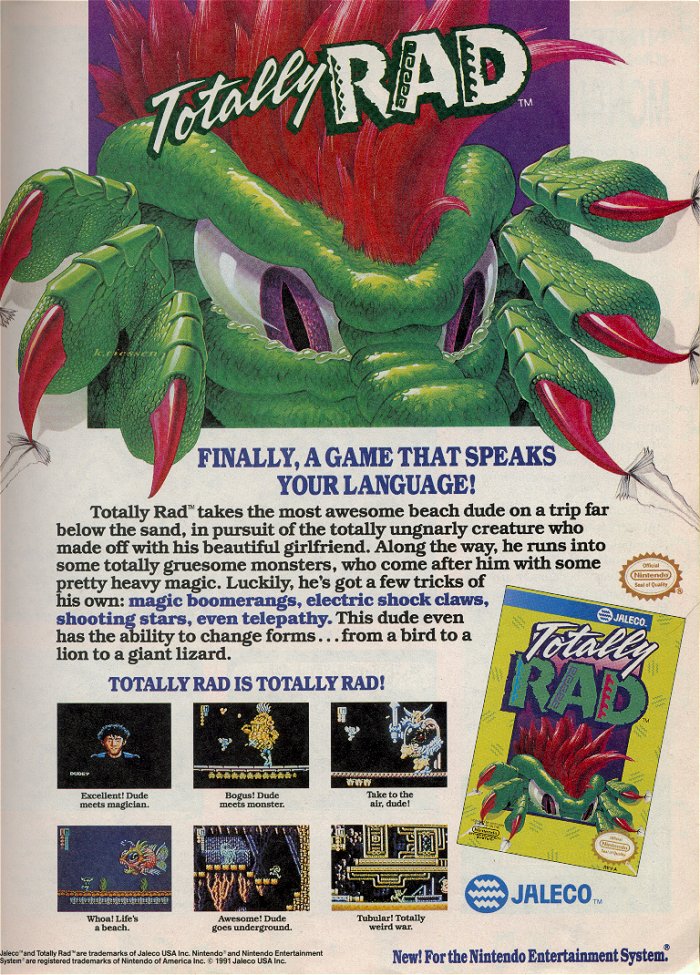
Look, I wanted to like that lanky Dominican kid. He looks pleasant enough, and he's got a fantastic name. His first name has "rad" AND "ham" in it. The nickname possibilities were endless. At Camden Chat, he was known as "Totally Rad", a nod to the NES game. I preferred "Rad Radford", because I'll work in a pro wrestling reference whenever possible.

Of course pesky, ugly reality had to interject itself into the proceedings. The reality was that Radhames was, and as near as I can tell still is, more of a thrower than a pitcher. Over three seasons, he has tossed 110.1 innings and allowed a spooky 208 base runners (1.885 WHIP). 92 of those runners have scored on his watch, for a sparkling 7.50 ERA. His strikeout-to-walk ratio is 1.08, which is decidedly not good. That giant "L" on his glove seems pretty fitting, yet his won-lost record in the majors is a so-so 6-8. When you factor in the club's overall record in his games, it's a more appropriate 10-18.

In recent years, any time the O's rid themselves of an overmatched pitcher there would be another one ready to hoist himself off of the junk heap to take his place. If you look at the 40-man roster and the likely pitching staff for AAA Norfolk, you'll still see a few candidates for that role in 2010. However, I really do believe that there are less of them now than there used to be. I have to believe that. Meanwhile, I'm actually a bit jealous of Rad Liz. After all, there are worse places to work than San Diego.

Tuesday, November 24, 2009

Ben McDonald, 1990 Bazooka Shining Star #10

I cannot believe that Ben McDonald is celebrating his 42nd birthday. I remember this tall, lanky Cajun as the "can't-miss" prospect who was still trying to put it all together five years after being drafted first overall out of Lousiana State University. He really did seem to turn a corner in his first full season - 1992 - when he went 13-13 with a 4.24 ERA and led the Orioles with 158 strikeouts. When I started tuning into O's games the following year, Ben seemed to be coming into his own. His 13 wins were one off of the team lead, and he posted team bests in ERA (3.39), complete games (seven), strikeouts (171), and WHIP (1.23).

O's fans could be forgiven for their giddiness when he started the 1994 season by winning his first seven starts and pitching into the seventh inning in each of them, compiling a 3.08 ERA in the process. However, he cooled off and went 7-7 with a 4.56 ERA for the duration of the season, and his faint chances of winning 20 games were blunted by the players' strike that wiped out the final seven weeks of the season.

Sadly, McDonald lasted only three more seasons, throwing his final pitch in 1997 with the Brewers at age 29. Rotator cuff surgery the following February proved unsuccessful, and he returned home to Louisiana with 78 career wins. Before you shed any tears for Ben, just remember that he's one of the precious few to have the honor of wrestling Cal Ripken, Jr. in stadium clubhouses around the country. He even lived to tell of it.

Monday, November 23, 2009

Scott McGregor, 1985 Fleer #183

After much debate, I would like to award the 1984 Orioles MVHH (Most Valuable Hair Helmet) to Scott McGregor. Actually, there was stiff competition, chiefly from fellow pitcher Tippy Martinez. Ultimately, the combover factor and mustache quotient pushed Scotty over the top. Besides, take a look at that icy death glare from #16. Would you want to tell him that he was once again the runner up? That is not a man who easily accepts bridesmaid status. So congratulations and kudos are in order.

Suddenly I have the urge to rewatch Anchorman...

Sunday, November 22, 2009

Cal Ripken, Sr., 1982 Donruss #579

In his day, Cal Ripken, Sr. was known to be a pretty serious soccer player. There's a strong tradition of soccer in the Baltimore area, particularly the indoor flavor of the game. Over the past three decades, the Blast (and the Spirit, as the club was known from 1992-1998) has been one of the premier teams of their various leagues. They've won ten division titles and six league championships, including five league crowns in the past seven years. I've never had an overwhelming interest in soccer, but I can generally talk myself into watching any sport and I thought that it couldn't hurt to support the one consistent winner in Charm City. With that in mind, I took a trip to the 1st Mariner Arena (known in previous lives as both the Baltimore Arena and the Baltimore Civic Center) last night to watch the Blast take on their longtime rivals, the Philadelphia KiXX. That may be the worst team name in all of professional sports.

My cohorts for the night were my 18-year-old cousin Brittany, a diehard Blast fan, and her parents. It was remarkable that Brittany made it to the game, as she'd had a fairly major surgery on Wednesday to remove a shunt (essentially, a tube to funnel fluid away from her brain). She still wasn't feeling all that well, but her desire to cheer on the home team won out. That's dedication. We had great seats two rows from the field; my sister's company provides the special effects for the team's pregame ceremonies, so she gave us the hookup.

As for the game itself, it was fairly exciting. Indoor soccer is an undeniable Americanization of a sport that's more popular in almost every other part of the world. You take the original game and put it on a hard floor overlaid with carpet, cut the field size in half, encircle the field with hockey-style boards, increase the value of goals (2 or 3 points each, depending on your position on the field), and pump up the noise with rock and pop music and a PA announcer who bellows cheering instructions to the fans. God bless the U.S.A.

I was struck by the diminutive size of most of the players. Denison Cabral, Baltimore's leading offensive player, stands in at 5'4...at least four inches shorter than O's second baseman Brian Roberts, one of the smallest players in MLB. In all, eight of the 20 Blast players are 5'9" or less, including forward Giuliano Celenza, a former schoolmate of mine in high school. The tallest player on the field for most of the game was forward Machel Millwood, a lanky Jamaican who towered over the other players and seemed to the naked eye to be at least 6'5". In actually, he was only 6'2". When it comes to soccer, I guess size doesn't matter so much.

I've been to dozens of baseball games in my life and never caught a foul ball. Wouldn't you just know that at my first indoor soccer game, an errant kick would send a ball sailing over the boards, bouncing past the couple next to me, and straight into my hands? I'm proud to say that I fielded the ball cleanly (thereby likely saving my recuperating cousin from further injury), though I did have to toss it back onto the field to the waiting referee. The Major Indoor Soccer League is not made of money, you know.

After a slow start (2-2 at the end of the first quarter, which soon turned into a 6-4 Philly lead), the Blast turned on the jets and took an 11-6 lead into the half. The careful teamwork of the players on both sides was a sight to see, with eight to ten men maneuvering in very close quarters for much of the game. Many times, one player would seem to know what his teammate would do before it happened, and there's no question that there's a great amount of skill involved. There was even a Baltimore goal on a diving header, which was an amazing sight. It was still 11-6 when we left after the third quarter (trying to ensure that Brittany didn't overdo it), but the Blast put the game away for good in the endgame and emerged with a 19-8 laugher.

The season is only two games old, so there are still nine opportunities to catch a game at the arena. Tickets start at $16, and you can find more information at the team's website. After all, you've gotta find something to do with your time until pitchers and catchers report.