Orioles Card "O" the Day

An intersection of two of my passions: baseball cards and the Baltimore Orioles. Updated daily?

Monday, November 30, 2009

Earl Weaver, 1989 Pacific Legends #179

Sometimes, Monday rolls around after a long and fulfilling holiday weekend and you wonder how you'll ever get back into the grind. It's dark, it's rainy, you're drawing a blank on Christmas gift ideas, and you know that you should squeeze in a workout but you just don't feel like it.

That's when you go back to basics and scan a simple, classy card with a photo of an uncomfortable-looking Earl Weaver kneeling in foul territory down the third base line in Memorial Stadium. It seems cruel to have Earl kneel - as if he isn't short enough already? Speaking of little things (sorry, Earl), if you click on the image to enlarge it, you might be able to make out "WEAVER" written on the flap of his cleat. I dig it. I also wonder if the skipper is reaching for a pack of smokes in that right hip pocket, but that's neither here nor there.

Sunday, November 29, 2009

Cal Ripken, Jr., 1989 Topps K-Mart Dream Team #15

I'm a traditional kind of guy, in that I absolutely refuse to start celebrating (or even recognizing) the Christmas season until I see Santa Claus roll down the street at the end of the Macy's Thanksgiving Day Parade. With retailers and other muckity-mucks doing their best to cram Christmas further and further into November, that means that I can get pretty grouchy during the weeks preceding turkey day. I probably have this mindset because of a fairly recent family custom. When my grandmother was alive, she had her own apartment on the bottom level of our house. She would host Thanksgiving dinner, and then the grandchildren (with an assist from the older folks) would decorate her artificial Christmas tree while we listened to holiday music. Anyway, the leftovers are in the fridge and I'm ready to ramp up to my favorite holiday.

I'm not the only one who's getting in the Christmas spirit. Yesterday, Cal Ripken, Jr. dropped in at the Kennedy Krieger Institute's Festival of Trees fundraiser. The Orioles great read his favorite holiday story, Dr. Seuss' How the Grinch Stole Christmas, to a receptive audience. It's good to see Baltimore's most famous citizen still giving back to the community nearly a decade after ending his playing career. It's an excellent cause, by the way; the Institute serves children and adolescents who are suffering from disorders and injuries of the brain and spinal cord.

In case you're curious, I saw a brief video clip of Cal's foray into storytelling. I'm sorry to say that he didn't affect a scary voice for the Grinch. Perhaps he should have let Billy Ripken handle the Grinch dialogue.

Saturday, November 28, 2009

Billy Owens, 1993 Classic Minor League #85

If you actually remember Billy Owens - or the Albany Polecats - you deserve a hearty pat on the back. Owens was a first baseman, drafted in the 3rd round of the 1992 draft by the O's. He had a strong frame (6'1", 210 lbs.), but never hit for much power, peaking with 17 home runs and 27 doubles. His best season was his second as a pro, the 1993 campaign depicted on this card. He spent much of the year at Albany, GA, in the class A South Atlantic ("Sally") League. That year, Owens hit .297 for the Polecats (yes, their mascot was a skunk) while reaching base at a .365 clip. Two years later, he drove in 91 runs in 122 games at AA Bowie, but couldn't transfer that success to AAA Rochester and wound up being cut loose from the Baltimore organization at age 25. He bounced around the Astros farm system for two more years before hanging up his spikes. Billy actually appears in the narrative of Michael Lewis' book Moneyball as one of Athletics GM Billy Beane's scouts. He seems to have a laid-back, slightly bemused attitude, going along to get along. It seems like the right approach to take with a boss as mercurial and competitive as Beane.

Friday, November 27, 2009

Vintage Fridays: Ron Hansen, 1961 Topps #240

As you're looking at this nearly fifty-year-old card, the first thing that jumps out at you is likely the ornate trophy icon that stretches from Ron Hansen's hips to his wrists. Since 1959, Topps has selected an All-Star Rookie team. The awesome logo you see above appeared on cards for the honored young players from 1960-1972. In 1973, they switched to a simple gold cup commonly known as the "Rookie Cup"; this design appeared on cards that year and again from 1975-1978, and finally from 1987 on through to the current day. I've always enjoyed seeing that designation on a card; it's visually appealing and it feels a little special. When I got back into collecting in 2007, my first purchase was that year's Series 1 Topps Orioles team set. I was proud to see the Rookie Cup on Nick Markakis' card; it was like a form of validation that the promising young outfielder had truly arrived.

Topps picks the top rookie at each position (there's no DH but there is both a LHP and a RHP, and there are 3 OFs just like the Gold Gloves). Some choices are a slam dunk, like Hansen. He hit 22 home runs and drove in 86 as a shortstop, which was rarefied air in those days. Not only was he the American League's Rookie of the Year, but he finished fifth in MVP balloting. Other times, Topps had to select from a shallow pool. I did a double take when I saw the Rookie Cup on Geronimo Gil's 2003 card (2002 stats: .232 AVG, .277 OBP, 12 HR. 45 RBI), for instance.

Earlier this week, Topps announced their latest All-Star Rookie Team. Though the O's crop of budding young players had been shut out of the Rookie of the Year voting, they were represented on this team by outfielder Nolan Reimold, who hit .279 and led all A. L. rookies in home runs (15), on-base percentage (.365), and slugging percentage (.466). But the real news was the exclusion of much-heralded rookie catcher Matt Wieters, who was apparently passed over in favor of 28-year-old former Oriole and current Met receiver Omir Santos. Their stats (both played in 96 games):

Wieters: .288/.340/.412, 15 2B, 9 HR, 43 RBI
Santos: .260/.296/.391, 14 2B, 7 HR, 40 RBI

So what's the deal? Was Topps suffering from New York Bias? Were they committing blasphemy? Did they deem themselves unworthy of so much as uttering the name of the Great Wieters? Not quite. As near as I can tell, this bizarre selection was the result of good old fashioned baseball card company politics.

Last year, Razor (a smaller-time company that focuses on autographs and memorabilia and specializes in minor league and amateur players) trumpeted the signing of Wieters to an "exclusive" contract. Since Upper Deck has an agreement with the MLB Players' Association, however, they would have the right to produce cards of the catcher as soon as he was called up to the Orioles' big league roster (i.e., May 29, 2009). Topps' license is with the MLB itself, and not the players' association, so they're apparently shut out from the Wieters Derby until 365 days after his MLB debut; you won't see any Topps cards of the ex-Yellow Jacket until after Memorial Day 2010. I can barely make sense of the particulars here, but Razor basically wanted to boast that they would have Matt "first". Ugh.

So there you have it; Matt Wieters signed the deal with Razor ---> Topps can't feature him in their 2010 Series 1 ---> Topps chooses the path of least resistance and goes with a less-impressive catcher on their All-Star Rookie team. I'm sure Wieters will take solace in the MVP, Gold Glove, Silver Slugger, All-Star MVP, and World Series MVP trophies that he'll collect in 2010. No pressure, bud.

Thursday, November 26, 2009

Keith Reed, 2000 Bowman #264


This year, I'm thankful for:

-Fantastic trading partners like the mother-daughter team that sent me the nifty autographed card featured here

-A rejuvenated Orioles farm system that is full of top-level talent far superior to Keith Reed (Sorry, Keith)

-A small but appreciative (and responsive) readership that motivates me to keep blogging on those lazy days

-A supportive, close-knit family that includes a great new brother-in-law

-A stable new job with a much shorter commute

-Friends, including the new ones I've made and the old ones I've reconnected with

-Good health for me and my loved ones. Don't ever want to take that for granted

-My first two trips to the West Coast. San Diego is raipdly becoming one of my favorite places. By the by, the O's visit the Padres next June...

-Buying my first home - I'm in a holding pattern right now, but it should be a reality later this winter if all goes well

That's what comes to mind at present, though I could probably think of other things if I sat here long enough. If you have anything of your own to add, leave a comment. Happy Thanksgiving...even if you're Canadian.

Wednesday, November 25, 2009

Radhames Liz, 2008 Topps Heritage #133

Today I became reacquainted with one of the finest rites of the Hot Stove Season: bidding a fond farewell to the flotsam and jetsam of the recent past. In plain language, Radhames Liz is San Diego's problem now.

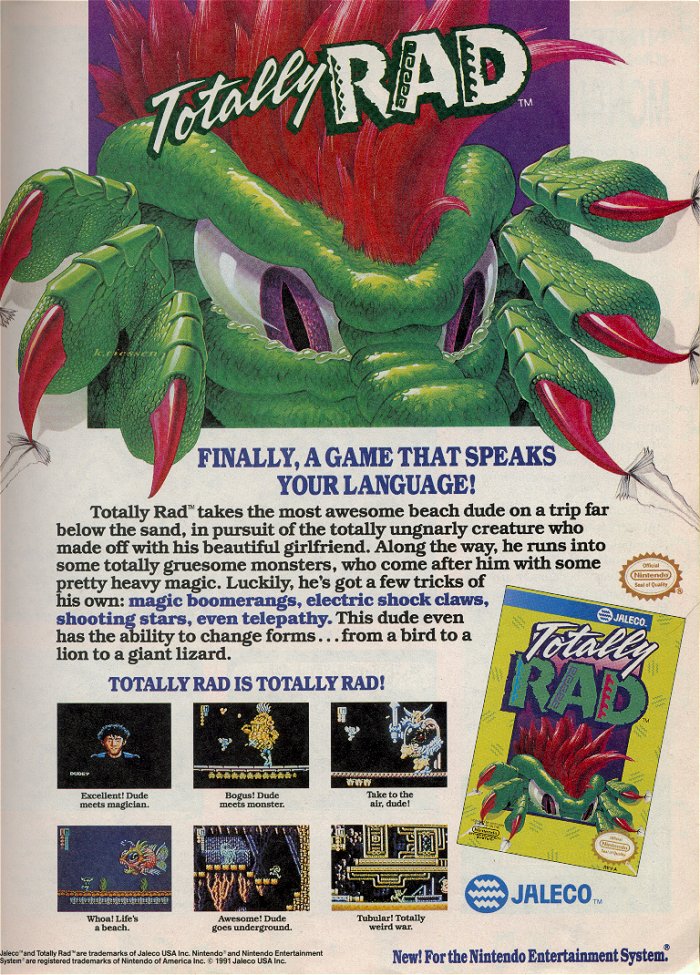
Look, I wanted to like that lanky Dominican kid. He looks pleasant enough, and he's got a fantastic name. His first name has "rad" AND "ham" in it. The nickname possibilities were endless. At Camden Chat, he was known as "Totally Rad", a nod to the NES game. I preferred "Rad Radford", because I'll work in a pro wrestling reference whenever possible.

Of course pesky, ugly reality had to interject itself into the proceedings. The reality was that Radhames was, and as near as I can tell still is, more of a thrower than a pitcher. Over three seasons, he has tossed 110.1 innings and allowed a spooky 208 base runners (1.885 WHIP). 92 of those runners have scored on his watch, for a sparkling 7.50 ERA. His strikeout-to-walk ratio is 1.08, which is decidedly not good. That giant "L" on his glove seems pretty fitting, yet his won-lost record in the majors is a so-so 6-8. When you factor in the club's overall record in his games, it's a more appropriate 10-18.

In recent years, any time the O's rid themselves of an overmatched pitcher there would be another one ready to hoist himself off of the junk heap to take his place. If you look at the 40-man roster and the likely pitching staff for AAA Norfolk, you'll still see a few candidates for that role in 2010. However, I really do believe that there are less of them now than there used to be. I have to believe that. Meanwhile, I'm actually a bit jealous of Rad Liz. After all, there are worse places to work than San Diego.

Tuesday, November 24, 2009

Ben McDonald, 1990 Bazooka Shining Star #10

I cannot believe that Ben McDonald is celebrating his 42nd birthday. I remember this tall, lanky Cajun as the "can't-miss" prospect who was still trying to put it all together five years after being drafted first overall out of Lousiana State University. He really did seem to turn a corner in his first full season - 1992 - when he went 13-13 with a 4.24 ERA and led the Orioles with 158 strikeouts. When I started tuning into O's games the following year, Ben seemed to be coming into his own. His 13 wins were one off of the team lead, and he posted team bests in ERA (3.39), complete games (seven), strikeouts (171), and WHIP (1.23).

O's fans could be forgiven for their giddiness when he started the 1994 season by winning his first seven starts and pitching into the seventh inning in each of them, compiling a 3.08 ERA in the process. However, he cooled off and went 7-7 with a 4.56 ERA for the duration of the season, and his faint chances of winning 20 games were blunted by the players' strike that wiped out the final seven weeks of the season.

Sadly, McDonald lasted only three more seasons, throwing his final pitch in 1997 with the Brewers at age 29. Rotator cuff surgery the following February proved unsuccessful, and he returned home to Louisiana with 78 career wins. Before you shed any tears for Ben, just remember that he's one of the precious few to have the honor of wrestling Cal Ripken, Jr. in stadium clubhouses around the country. He even lived to tell of it.

Monday, November 23, 2009

Scott McGregor, 1985 Fleer #183

After much debate, I would like to award the 1984 Orioles MVHH (Most Valuable Hair Helmet) to Scott McGregor. Actually, there was stiff competition, chiefly from fellow pitcher Tippy Martinez. Ultimately, the combover factor and mustache quotient pushed Scotty over the top. Besides, take a look at that icy death glare from #16. Would you want to tell him that he was once again the runner up? That is not a man who easily accepts bridesmaid status. So congratulations and kudos are in order.

Suddenly I have the urge to rewatch Anchorman...

Sunday, November 22, 2009

Cal Ripken, Sr., 1982 Donruss #579

In his day, Cal Ripken, Sr. was known to be a pretty serious soccer player. There's a strong tradition of soccer in the Baltimore area, particularly the indoor flavor of the game. Over the past three decades, the Blast (and the Spirit, as the club was known from 1992-1998) has been one of the premier teams of their various leagues. They've won ten division titles and six league championships, including five league crowns in the past seven years. I've never had an overwhelming interest in soccer, but I can generally talk myself into watching any sport and I thought that it couldn't hurt to support the one consistent winner in Charm City. With that in mind, I took a trip to the 1st Mariner Arena (known in previous lives as both the Baltimore Arena and the Baltimore Civic Center) last night to watch the Blast take on their longtime rivals, the Philadelphia KiXX. That may be the worst team name in all of professional sports.

My cohorts for the night were my 18-year-old cousin Brittany, a diehard Blast fan, and her parents. It was remarkable that Brittany made it to the game, as she'd had a fairly major surgery on Wednesday to remove a shunt (essentially, a tube to funnel fluid away from her brain). She still wasn't feeling all that well, but her desire to cheer on the home team won out. That's dedication. We had great seats two rows from the field; my sister's company provides the special effects for the team's pregame ceremonies, so she gave us the hookup.

As for the game itself, it was fairly exciting. Indoor soccer is an undeniable Americanization of a sport that's more popular in almost every other part of the world. You take the original game and put it on a hard floor overlaid with carpet, cut the field size in half, encircle the field with hockey-style boards, increase the value of goals (2 or 3 points each, depending on your position on the field), and pump up the noise with rock and pop music and a PA announcer who bellows cheering instructions to the fans. God bless the U.S.A.

I was struck by the diminutive size of most of the players. Denison Cabral, Baltimore's leading offensive player, stands in at 5'4...at least four inches shorter than O's second baseman Brian Roberts, one of the smallest players in MLB. In all, eight of the 20 Blast players are 5'9" or less, including forward Giuliano Celenza, a former schoolmate of mine in high school. The tallest player on the field for most of the game was forward Machel Millwood, a lanky Jamaican who towered over the other players and seemed to the naked eye to be at least 6'5". In actually, he was only 6'2". When it comes to soccer, I guess size doesn't matter so much.

I've been to dozens of baseball games in my life and never caught a foul ball. Wouldn't you just know that at my first indoor soccer game, an errant kick would send a ball sailing over the boards, bouncing past the couple next to me, and straight into my hands? I'm proud to say that I fielded the ball cleanly (thereby likely saving my recuperating cousin from further injury), though I did have to toss it back onto the field to the waiting referee. The Major Indoor Soccer League is not made of money, you know.

After a slow start (2-2 at the end of the first quarter, which soon turned into a 6-4 Philly lead), the Blast turned on the jets and took an 11-6 lead into the half. The careful teamwork of the players on both sides was a sight to see, with eight to ten men maneuvering in very close quarters for much of the game. Many times, one player would seem to know what his teammate would do before it happened, and there's no question that there's a great amount of skill involved. There was even a Baltimore goal on a diving header, which was an amazing sight. It was still 11-6 when we left after the third quarter (trying to ensure that Brittany didn't overdo it), but the Blast put the game away for good in the endgame and emerged with a 19-8 laugher.

The season is only two games old, so there are still nine opportunities to catch a game at the arena. Tickets start at $16, and you can find more information at the team's website. After all, you've gotta find something to do with your time until pitchers and catchers report.

Saturday, November 21, 2009

Tito Landrum, 1991 Crown/Coca-Cola All-Time Orioles #254

Reasons the Internet is wonderful, part 731: The Sports Illustrated Vault. Yesterday, Stacey at Camden Chat linked to this glorious article by the great Frank Deford, detailing the Orioles' four-game romp over the White Sox in the 1983 ALCS. Of course it made mention of the highly unlikely series-clinching home run by the esteemed Tito Landrum, who had been on the team for less than two months and who would hit 13 home runs in his career. His blast broke a scoreless tie in the tenth inning and drove Chicago starter Britt Burns from the game; the O's would tack on two more runs before Tippy Martinez slammed the door shut in the bottom of the frame. Oh, and apropos of nothing, Deford mentions in passing that Tito used to be a male model.

*record scratch*

What?

Let's quote the relevant piece of text: "A onetime male model, Landrum got to bat 41 times for the Orioles, but he never started a game in right-field until the playoffs, when Dan Ford was hobbled by an injured right foot."

Yep, that's what I thought he said. But seriously, how could you just throw that out there and let it drop? Have any of you ever heard of that before? And how the hell was Tito a male model? As Stacey said, "I don't see it". Look, the Birds have a long and rich history of players moonlighting as beefcakes: Jim Palmer, Brady Anderson, Scott Erickson. But look at that photo. No harm meant, but on the list of most attractive O's, Landrum is several notches below the aforementioned guys, firmly entrenched in Joe Orsulak territory. To be fair, he's still not anywhere near Andy Etchebarren's cool, dank basement.

Look, I can pick on Tito all that I want. But at the end of the day, he played 39 regular-season games in an Orioles uniform and had one big hit to win a crucial postseason game. That's not a bad ratio.

Friday, November 20, 2009

Vintage Fridays: Billy Smith, 1978 Topps #666

As of midnight this morning, the Major League Baseball free agent signing period has begun. The Orioles have a lot more money available than they have had in previous years, with some real albatross contracts coming off of the books. Even with all of the strides in player development in the past few years, there are a lot of holes left to fill (third base, first base, middle-of-the-order power hitter, veteran starter, several bullpen arms...I think that's all). Naturally, this is the worst-quality free agent market in years. In the end, I just hope the O's have a better Hot Stove season than they did when free agency first hit.

In the winter of 1976-1977, players finally earned the right to test the market for themselves, and the small-market Orioles (led by owner and local brewer Jerry Hoffberger) got hit hard. They lost pitcher Wayne Garland, who had broken through with a 20-7, 2.67 ERA season at age 25, to the Indians on a preposterous 10-year contract. Also gone was homegrown second baseman Bobby Grich, who took four Gold Gloves and three All-Star selections with him to the Angels. The biggest blow of all may have been brash slugger Reggie Jackson, who had cost the Birds budding star outfielder Don Baylor and two pitchers in a blockbuster trade less than a year earlier. Worst of all, Reggie had gone to the hated Yankees, who had recently toppled the Birds from their perch atop the American League East after more than a decade of futility.

As near as I can tell, the O's did not sign a free agent who would make their 1977 roster until February, when they reached an agreement with Billy Smith, a 23-year-old infielder with 72 games of big league experience. In 411 trips to the plate, he hit .215 with a .581 OPS as Grich's primary replacement. He would stay in Baltimore for two more seasons, and in a reduced role he was actually slightly above league average with the bat while playing solid defense. But all things being equal, I'm sure the Orioles would have rather kept his predecessor.

You almost get the sense that the home team wasn't prepared for the onset of free agency.

Thursday, November 19, 2009

Nick Markakis, 2009 Upper Deck Icons Lettermen #IL-NM

If there's any better time to get a package in the mail than on a rainy, miserable Thursday night, I can't imagine it. Tonight I got a little bubble-wrapped pick-me-up from Max, aka jacobmrley. The big prizes were a Pete Rose card for my 1965 Topps set (only 57 cards left to get!), and of course the fabulous Nick Markakis card you see above.

Now, that's not actually a piece of one of Nick's jerseys. It was manufactured by Upper Deck. This does not make it any less cool. They have separate cards for each letter of his first and last name, and the card back actually suggests that you collect all twelve. I'm not quite masochistic enough to chase down and buy that many essentially identical cards, so I'm perfectly happy with my "K" (for Kevin, you know).

Max also sent along several more essential additions to my O's collection, including my first Nolan Reimold and Chris Tillman cards, another handful of fierce Eddie Murrays, and a 1985 Fleer team set. Yes, please.

Wednesday, November 18, 2009

Mike Mussina, 1998 Score #258

Seriously? This was one of the most memorable highlights from the first year of interleague play? Even if that's true, couldn't they have gotten an actual photo of Moose swinging the bat? Sheesh.

Somehow I can imagine commissioner Bud Selig calling Score and ordering them to produce a subset of cards that praise the wild successes of his ham-handed experiment. When it comes right down to it, it's just baseball teams playing different baseball teams. Even if it generated some extra buzz, that doesn't mean that it was inherently historic. But I've got no real problem with interleague play, and I will admit that it's a bit enjoyable to see some fresh teams now and again. At least they phased out that ridiculous fighting eagle logo that's floating behind Mike Mussina.

Okay, back to the pointlessness of this card. It reminds me of Bart Simpson ripping open that pack of Krusty the Clown cards and finding captions like "Krusty poses for trading card photo" and "Krusty visits relatives in Annapolis, MD". Perhaps this subset should have stayed on the drawing board. Here are some other possible Interleague Moments:

-Barry Bonds sneers at Seattle beat reporter
-David Wells eats a cheesesteak on the mound
-Gary Sheffield misinterprets Boston third base coach's sneeze, threatens him with bodily harm
-Jeff Bagwell, Frank Thomas plan joint 30th birthday party for next year
-Mark McGwire comparison-shops pharmacies in Cleveland

Tuesday, November 17, 2009

Eric Davis, 1997 Leaf #313

Time is getting away from me. Just the other day, I tracked down a girl on Facebook that was a good friend of mine in high school. We were chatting, and I found myself a bit overwhelmed by trying to squeeze in all of the updates on my life. Of course, that's because it had been almost ten years since we'd spoken.

I could go on complaining about the creeping signs that I'm getting older (like the fact that my legs are still sore and stiff from a two-mile jog on Sunday, or that I now seem to have more married friends than singletons), but anyone above the age of 27 who's reading this blog entry would probably give me a gentle suggestion to stuff it.

Anyhow, while the days and months and years keep spinning by, I take comfort in knowing that I might never be as old as the 1998 Orioles. You're likely aware that 1998 was the year that Baltimore's fascination with veteran free agents reached a tipping point, as they gobbled up brittle, ill-fitting pieces like Ozzie Guillen and Norm Charlton and stumbled from first place to fourth in the East. The average age of the 48 players who suited up that year was 33.3 years, which is an interesting number...

...When put in the context of history. Baseball-Reference.com blogger Raphy sought out some quirky lineups from the past half-century and discovered that the 1998 team was the only club from 1954 to the present to feature a starting lineup consisting entirely of players age 33 and older. They managed the feat on July 23, 1998, when the graybeards downed the visiting Oakland A's 9-7 in a rousing comeback effort. Eric Davis contributed three hits and two RBI, and catcher Lenny Webster was the hero of the day with four hits and six RBI, including a walk-off two-run homer in the bottom of the ninth to break a tie. The entire "mature" starting ten:

1 Brady Anderson 34.186 CF
2 Jeff Reboulet 34.084 2B
3 Rafael Palmeiro 33.302 1B
4 Eric Davis 36.055 DH
5 B.J. Surhoff 33.353 LF
6 Cal Ripken 37.333 3B
7 Joe Carter 38.138 RF
8 Lenny Webster 33.163 C
9 Mike Bordick 33.002 SS
Doug Drabek 35.363 P

Two days earlier, the entire batting order was 33 and up, but starting pitcher Scott Erickson was a spry 30. Nevertheless, the O's beat the A's easily, 7-1. If only they had kept those ancient wonder boys together all year, clearly they would have been a force to be reckoned with. Ahem.

Monday, November 16, 2009

Jim Gentile, 1985 Topps Woolworth's All-Time Record Holders #15

Should you ever doubt that I have enough material to keep this blog going for several more years, consider this: I've been at it for nearly two years now, and this is the first card I've posted of Jim Gentile. That might speak more to my negligence than anything else, but there you have it.

I've noticed that among the more "experienced" Orioles fans that I know, "Diamond Jim" is an overwhelming favorite. It's not hard to see why. Thought first base is known as a position for power hitters, the O's had not had a first sacker reach double digits in home runs in the team's first six years in Baltimore. But manager Paul Richards rescued Gentile from the Dodgers organization, where he had been moldering in the minors for eight years despite putting up some big numbers (to be fair, they had a guy named Gil Hodges blocking his path). He paid immediate dividends, socking 21 homers and driving in 98 runs in his first full season in the big time while reaching base at a .403 clip. He was an All-Star and a Rookie of the Year runner-up. But Jim was just getting started.

In 1961, offense was up all over baseball, but even in that context Gentile had the greatest season ever by an Oriole first baseman. The totals were eye-popping: 46 home runs, 141 RBI, and .302/.423/.646 AVG/OBP/SLG. If it weren't for a couple of guys named Maris and Mantle, the 6'4" first baseman would likely have been the league's MVP. He hit his homers with a total of 46 runners on base, the highest total since Babe Ruth knocked in 48 in 1921. He hit five grand slams (two in consecutive innings on May 9), setting an A.L. record that was eventually surpassed by Don Mattingly in 1987. His 1.069 OPS is still a team record for a single season, and his RBI total wasn't surpassed until Rafael Palmeiro scraped by in 1996.

Though his production fell off over the next two years, Jim was still an above-average hitter, and he led the club with 57 total longballs over that span. Though the club traded him to Kansas City prior to the 1964 season, the soft-spoken giant made a big impact in just four years in Charm City. Boog Powell, Eddie Murray, and Palmeiro may have stayed longer, but Diamond Jim was the one who paved the way.

Sunday, November 15, 2009

Paul Bako, 2007 Topps Updates and Highlights Red Backs #UH306

I'm sure the photographer was going for a typical "catcher pounding the glove" pose here, but instead it looks like Paul Bako is preparing to unleash a five-knuckle shuffle on anyone who gets too close to him. Of course, we all know how much punch "Base Knock Bako" packs, if his .623 career OPS (62 OPS+) is to be believed. Am I right? Wait...oh no. Paul, I was just kidding! It was all in good fun! I love you like a brother - every one of your 32 hits for the O's were pure magic! Don't raise a hand to me...no...NOOOOO!

Sheesh. With a quick-trigger temper like that, no wonder he's played for 11 teams in 12 years. For more Bakolicious humor, check out this tongue-in-cheek blog post at Royals Review.

Saturday, November 14, 2009

Luis Rivera, 2003 Donruss Team Heroes #57

The next time you find yourself wondering exactly how the Orioles fell into a pit deep enough to result in a dozen consecutive losing seasons, think about Luis Rivera, featured here on a 2003 baseball card. Incidentally, he pitched his final major league game in 2000.

Rivera had been one of Baseball America's Top 100 prospects for three years running (44th, 71st, and 51st, respectively) when the O's acquired him from the Braves along with space-fillers Fernando Lunar and Trenidad Hubbard in exchange for pitcher Gabe Molina and veteran outfielder B. J. Surhoff. Though the team was going nowhere that year and was selling off most of its bankable veterans, the Surhoff trade was especially hard to swallow. He'd been with the club for five years and had deep ties to Baltimore. His wife Polly was local, and his autistic son Mason had been receiving top-notch care at Johns Hopkins. It was heartbreaking to watch B. J. break down and cry at the ensuing press conference, and it's been reported that pending free agent Mike Mussina was furious that the club shipped out the outfielder.

The Birds got very little of value in any of the swaps they made that summer, with only Melvin Mora making any long-term impact for the club. But the trade with Atlanta may have been the worst. Lunar played only 75 games over three seasons, hitting .235 with no power or plate discipline. The 35-year-old Hubbard went 5-for-27 and departed at season's end. What of Rivera, the supposed "prospect" in the bunch? He turned in a whopping 2/3 of a scoreless inning in a single appearance out of the O's bullpen following a September callup. He missed all of the 2001 and 2002 seasons while undergoing two surgeries for a torn labrum within 14 months, and the team released him in early 2003. He's pitched in his native Mexico ever since, with terrible results.

At least the Orioles brought B. J. back in 2003, allowing him to finish his career in Charm City.

Friday, November 13, 2009

Vintage Fridays: Al Severinsen and Roger Freed, 1970 Topps #477

If this card seems uncommonly spooky, keep in mind that today is Friday the 13th. I don't know about you, but that mutant colony of chaw in Al Severinsen's cheek gives me the willies. Then there's flycatcher Roger Freed, who became just the third player in team history to wear #13 on his back when he debuted with the Orioles in 1970. Above all, there is the misleading label of "Rookie Stars", bestowed upon two young men who combined to play 14 games in O's uniforms. There's a chill in the air...

Actually, I was hoping to post a "Jason" card tonight, for obvious reasons. But sadly, the Birds did not have any Jasons in their history until 1999, far past the Vintage Fridays cutoff date of 1980. To date, these pitchers are the only three players in team history who share that name:

Jason Johnson (1999-2003) 34-53, 4.84 ERA
Jason Grimsley (2004-2005) 3-6, 4.78 ERA
Jason Berken (2009) 6-12, 6.54 ERA

AAAAAUUUUUGGGGHHHHHH! Now that's a scary group of killers. Sleep with one eye open, kids...

Thursday, November 12, 2009

Jim Palmer, 2003 Topps T206 Polar Bear Mini #446

Rumor has it that Jim Palmer was an unbelievably, absurdly good pitcher. You'd probably accept that statement at face value, but why not feast on some sumptuous statistical evidence? According to the always-worthwhile Baseball-Reference Blog, "Cakes" is one of the rare pitchers in the past 55 years to post more shutouts than losses in a single season. In 1969, the 23-year-old righty won 16 games (six of which were shutouts) and lost only four. Incredible? Sure.

But wait, there's more!

Of Palmer's 268 career wins, 53 were whitewashes. Comparing those 53 shutouts to his 152 losses, he had 34.8% as many shutouts as losses. He's one of only seven pitchers post-1954 (again, that's as far back as B-R.com has detailed game-by-game data) with at least 100 wins to post such a high ratio of shutouts to losses. He has the most career wins of anyone on that list, outpacing fellow Hall of Famers Bob Gibson and Juan Marichal.

In conclusion, Jim Palmer has earned the right to spend the rest of his natural life talking about how great he is. It's just a happy coincidence that someone pays him to do so.

Wednesday, November 11, 2009

Davey Johnson, 2005 Topps All-Time Fan Favorites #55

Davey Johnson, Hall of Famer? If you ask me, it seems like a long shot, but he is on the ballot. Next month, the re-re-re-revamped Veterans' Committee will choose from an assortment of managers, umpires, and executives for Cooperstown's Class of 2010. The former O's second baseman and skipper is one of eight retired managers on the ballot (the list is here, and includes fellow ex-Oriole Whitey Herzog).

There's little question that Davey was a solid, above-average player, but his on-field performance alone would not qualify him for enshrinement. He was a four-time All-Star who won three Gold Gloves and once hit 43 home runs in a season, but he also hit just .261 with a .340 on-base percentage in thirteen seasons. He didn't quite have the longevity or the larger-than-life numbers to put him over the top.

But I really did underestimate Johnson's successes as a manager. In 14 seasons (12 full and two partial), he won 1,148 games and lost 888. His .564 winning percentage ranks 13th among all managers with at least 1,000 games managed. The most eye-opening stat: in his 12 full seasons, his teams finished in first place five times, second place six times, and third once. I may have overlooked him because he won just one World Series, with the 1986 Mets. Of course, Earl Weaver also piloted a single world champion, and there's no question that he was pretty damn good. Maybe Davey gets shortchanged because he was never a fixture with any single team; he helmed the Mets, Reds, Orioles, and Dodgers, and his longest tenure was the six-and-a-quarter years he spent in New York. Nonetheless, he was a winner wherever he went.

Best of luck to Davey and the rest of the candidates!